Tooth Extraction Recovery Day by Day: Complete Timeline & Care Guide
A complete day-by-day guide to tooth extraction recovery. Learn normal healing stages, safe diet timelines, alcohol risks, and red flags.
Disclosure: This post contains affiliate links. If you buy through them, we may earn a small commission at no extra cost to you.
Embarking on your dental recovery journey can be daunting. If you’ve just had a tooth removed, your main questions are likely: “What should this look like?” and “Is my healing normal?”
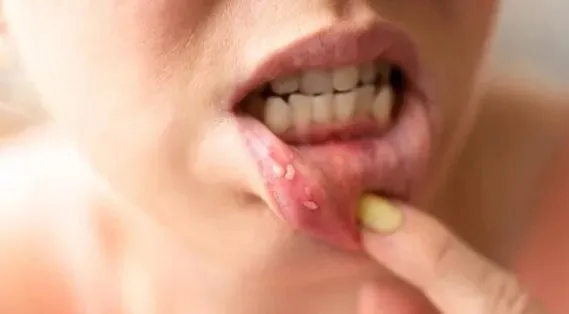
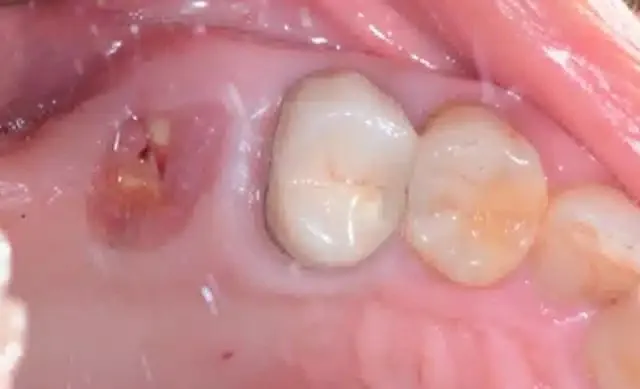
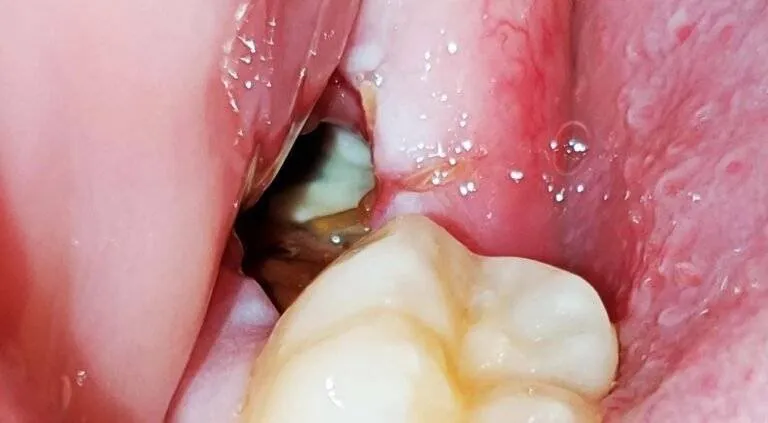
Knowing what to expect from the healing process is crucial for a smooth recovery. This comprehensive guide provides a detailed, day-by-day breakdown of the healing stages, complete with pictures to show you exactly what to expect.
We will cover the healing process post-tooth removal, show you how to identify signs of infection, and provide clear aftercare instructions to empower you on your recovery.

🧮 Free tool: Use our free tooth extraction healing calculator to see what is normal for your day.
📩 Important: after you sign up, open the email from Go Fix Teeth and tap Confirm. Your PDF opens right away. Not there? Check Spam or Promotions.
Make the next few days easier
Having these basics ready at home makes the first few days more comfortable:
Ice pack head wrap
Hands-free cold therapy for the first 48 hours to limit swelling.
Check price on AmazonSterile 4×4 gauze pads
Bite down gently to control oozing on day 1. Keep extra at home.
Check price on Amazon📘 Want the full plan? Our Dental Recovery & Savings Bundle covers day-by-day care, pain relief and how to save on dental bills.
As an Amazon Associate we earn from qualifying purchases, at no extra cost to you. Always follow your dentist's instructions.
Understanding the Dental Recovery Journey
What Happens During the Procedure?
A removal procedure involves extracting a tooth from its socket in the bone. This dental surgery is often necessary due to severe decay, infection, or impaction, particularly with Wisdom Teeth. Following the removal, a blood clot forms in the extraction site.
This blood clot is essential to healing and protects the underlying bone and nerve endings.
The Importance of Post-Extraction Care
Aftercare is paramount for ensuring proper healing. The first 24 hours of your dental recovery journey are especially critical. To manage the initial healing process effectively, it is important to focus on:
- Following your dentist’s instructions regarding pain medication.
- Keeping your head elevated to manage swelling.
- Practicing gentle oral hygiene (like saline rinses) without disturbing the blood clot.
- Adhering to a soft foods diet.
Factors Influencing Healing Time
The healing time varies. The complexity of the tooth removal (like impacted wisdom teeth), individual health conditions (like diabetes or lupus), and lifestyle choices (like smoking) can all affect the recovery timeline. Complex surgical removals—such as multi-rooted molar extractions or impacted wisdom teeth—require more time for tissue repair than simple single-root extractions.
Crucial Steps in Your Dental Recovery Journey
Waking Up: Anesthesia and Pain Medication
As the Anesthesia wears off following your Wisdom Tooth Extraction, you will begin to feel sensation return to your mouth. This is the time to stay ahead of the discomfort. Follow your surgeon’s advice regarding pain medication.
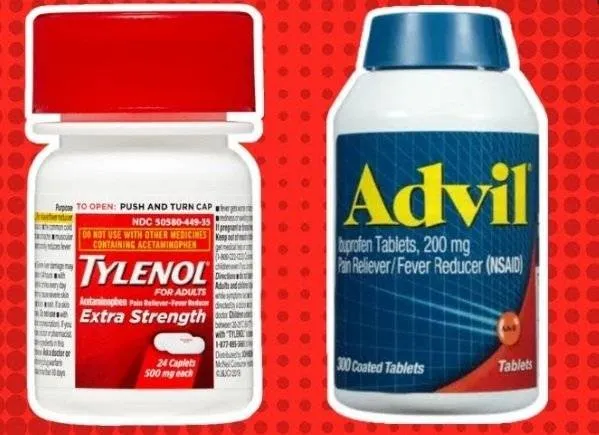
Over-the-counter options like ibuprofen are frequently recommended by the American Dental Association to manage swelling and reduce inflammation around the Extraction Sites. Clinical studies compiled by the National Institute of Dental and Craniofacial Research (NIDCR) show that taking anti-inflammatory medications before full sensation returns helps prevent inflammatory pain spikes.
Considerations for Partial Dentures
If your surgical procedure is part of a broader plan to receive Partial Dentures, your healing timeline might look slightly different. Your gums need to heal completely and reshape before the final fitting to ensure comfort, proper alignment, and function.
Managing Peak Swelling and Jaw Stiffness (Trismus)
Post-operative swelling typically develops over the first 48 hours and reaches its maximum intensity on Days 2 and 3. In addition to facial swelling, many patients experience temporary jaw stiffness, known medically as trismus. This occurs due to muscle spasm and surgical trauma near the temporomandibular joint (TMJ).
- Cold Therapy (Days 1–2): Apply an ice pack wrapped in a cloth to the outside of your cheek for 20 minutes on, 20 minutes off during the first 48 hours to minimize fluid accumulation.
- Heat Therapy (Day 3+): Switch to warm compresses starting on Day 3. Warmth boosts circulation, relaxes stiff jaw muscles, and promotes cellular repair.
- Gentle Jaw Exercises: Starting around Day 3 or 4, gently practice slowly opening and closing your mouth within a comfortable range to prevent permanent stiffness. Never force the jaw open if you experience sharp pain.
Day-by-Day Healing Timeline
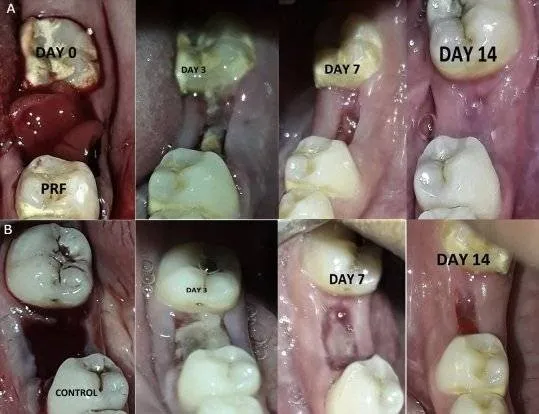
Here is what you can expect as your day by day healing progresses.
First 24 Hours: Immediate Aftercare
This period is crucial for blood clot formation. Immediately after the procedure, a gauze pad will be placed over the site to control bleeding. Avoid excessive spitting, rinsing, or drinking through a straw, as this can dislodge the clot and lead to a painful complication. Focus on rest.
Day 1: Initial Healing and Symptoms
Day 1 marks the start of the healing timeline. The blood clot is forming and stabilizing.
- What to expect: Some bleeding, swelling, and pain are normal. Mild oozing mixed with saliva is completely expected.
- Diet: Stick to soft, cool foods (yogurt, smoothies without straws, lukewarm soup, mashed potatoes).
- Hygiene: You can gently rinse with warm water, but do not swish vigorously. Avoid brushing directly over the extraction site.
Day 2: Peak Swelling and Clot Stabilization
Don’t be alarmed if your swelling is worse today. This is completely normal and often marks the peak of post-operative swelling.
- What to expect: Swelling and jaw stiffness may be at their most noticeable. Moderate dull aching is normal.
- The Clot: The blood clot should be stable and look dark red or brownish. Your main job is to protect it.
- Hygiene: Continue gentle warm saltwater rinses (1/2 tsp salt in 8 oz warm water) after meals to maintain Oral Hygiene without dislodging the clot.
Official Post-Extraction Care Guide (PDF)
Don’t risk a painful Dry Socket! Download our printable 7-day clinical guide showing you exactly what to eat, what to avoid, and how to clean safely during your recovery.
✓ Includes the complete “No-Suction” rule list
✓ Safe meal plans for Days 1 to 7
✓ Proper salt-water rinsing instructions
Recovery essentials (Amazon)
- Jaw ice pack wrap for wisdom teeth — Cold therapy for swelling in the first 48 hours
- usmile C30 Cordless Water Flosser — Gently rinse the socket after day 5 (as your dentist advises)
- Extra soft toothbrush post surgery — Clean around the area without disturbing the clot
As an Amazon Associate we earn from qualifying purchases, at no extra cost to you.
*100% Free Resource. A quick human verification is required to prevent bot spam.
Day 3: The Turning Point & Granulation Tissue Begins
By Day 3, you should feel a noticeable improvement.
- What to expect: Swelling and pain should begin to decrease significantly. Peak surgical soreness turns into a manageable dull ache.
- Crucial Development: Around
Day 3orDay 4, you may see new, pinkish-red, jelly-like tissue forming in the socket. This is granulation tissue (consisting of collagen, capillaries, and white blood cells), not food debris. It is the healthy foundation for new gums and bone, and it’s exactly what you want to see.
Day 4-5: Significant Improvement
By days 4 and 5, you are over the initial hump.
- What to expect: Pain and swelling should be dramatically reduced. You will rely far less on pain medications.
- The Healing Site: The
granulation tissuewill continue to fill the socket. White or cream-colored patches over the tissue are normal signs of collagen matrix deposition. The hole will start to look less “deep.” - Diet: You can now move to soft solid foods (scrambled eggs, oatmeal, pasta, soft fish). Continue avoiding crunchy, sharp, or spicy foods.
Day 6-10: Closing the Gap
This period marks the final stage of the initial healing process. Your risk of complications is now extremely low.
- What to expect: The hole will be noticeably smaller as the gum tissue closes over the top. By
day 10, surface gum healing is nearing completion. - Diet: You can slowly reintroduce more normal foods, but avoid chewing directly on the site.
Day 11-14 and Beyond: Deep Bone Remodeling
While the surface gum line closes within two weeks, structural healing under the surface continues for months:
- Weeks 2 to 4: The soft tissue fully covers the socket. Mild indentations in the gumline may remain as bone beneath remodels.
- Months 3 to 6: Osteoblasts build new bone to fill the socket completely, a process documented by the Mayo Clinic. Complete jawbone density is typically restored between 3 and 6 months post-surgery.
Summary Table: Day-by-Day Recovery Timeline
| Stage / Day | Visual Appearance | Expected Pain & Swelling | Key Milestones & Diet |
|---|---|---|---|
| Day 1 | Dark red blood clot filling socket; slight oozing. | Moderate to sharp pain as numbness fades; mild swelling. | Clot formation; ice cheek; liquid/cool soft diet; no suction. |
| Days 2–3 | Dark red/brown clot; early pink granulation tissue by Day 3. | PEAK swelling and jaw stiffness (trismus); dull ache. | Switch to warm compresses on Day 3; gentle saltwater rinses. |
| Days 4–5 | Cream/white granulation coating over pink tissue. | Noticeable reduction in swelling and pain. | Introduce soft solids (eggs, pasta); light activity resumes. |
| Days 6–10 | Socket opening shrinks significantly; gums smoothing over. | Minimal to no pain; residual tenderness when chewing. | Gradual return to regular foods (avoid direct pressure on site). |
| Days 11–14+ | Surface gum closure complete; small indentation remains. | Zero discomfort under normal conditions. | Internal bone remodeling under way (3–6 months total). |
Post-Extraction Nutrition: Day-by-Day Diet & Food Progression
Proper nutrition provides the essential amino acids, vitamins, and minerals your body needs to rebuild collagen and bone. However, eating the wrong foods too early can physically dislodge your blood clot or introduce stubborn food particles into healing sockets. Follow this progressive diet schedule:
Diet Timeline from Day 1 to Week 2
- First 24 Hours (Liquids & Purees Only): Stick entirely to cool or room-temperature liquids. Consume water, clear broths, pulp-free apple juice, and room-temperature herbal teas. Never use a straw—suction forces are the leading cause of clot dislodgement.
- Days 2 to 3 (Ultra-Soft Foods): Incorporate smooth foods that require zero chewing: smooth yogurt, pudding, applesauce, mashed avocados, and lukewarm pureed vegetable or bone soups.
- Days 4 to 7 (Soft Solids & Gentle Textures): Transition to tender, fork-mashable foods. You can safely eat scrambled eggs, soft pasta (like mac and cheese), well-cooked oatmeal, flaky steamed fish, soft tofu, and tender shredded chicken. Chew slowly on the side opposite your extraction.
- Days 8 to 14 (Expanded Soft Diet): As gum tissue seals over the socket, reintroduce soft bread, ground meats, cooked rice, soft steamed vegetables, and soft fruit slices. Avoid hard, crunchy, or chewy foods until fully cleared.
- After 2 Weeks (Near-Normal Diet): Most patients can resume normal eating patterns. Still exercise caution with extremely hard foods (nuts, popcorn, hard candies, tortilla chips) that could scratch healing gums.
Best Nutritious Foods for Healing
| Food Category | Top Choices | Healing Benefits |
|---|---|---|
| Proteins | Scrambled eggs, Greek yogurt, cottage cheese, flaky salmon/cod, soft tofu, protein shakes (spoon-fed). | Supplies amino acids critical for tissue synthesis and immune defense. |
| Carbohydrates | Mashed potatoes, sweet potato puree, soft oatmeal, well-cooked pasta, cream of wheat. | Provides easily digestible caloric energy, potassium, and vitamin A for cellular repair. |
| Fruits & Vegetables | Applesauce, mashed bananas, avocado, steamed and mashed carrots, pureed butternut squash. | Delivers antioxidant vitamins C and A to accelerate collagen formation without chewing stress. |
| Broths & Soups | Bone broth, pureed tomato bisque, mild chicken noodle soup with shredded chicken. | Hydrates oral tissues and delivers natural collagen and anti-inflammatory electrolytes. |
Alcohol, Hydration & Medication Safety During Recovery
After oral surgery, consuming alcohol is not just a lifestyle choice—it is a critical medical decision. Oral surgeons strongly recommend avoiding all alcohol for at least 48 to 72 hours, and ideally for 7 to 10 days post-surgery, due to significant biological and pharmacological hazards:
1. Blood Clot Breakdown & Skyrocketing Dry Socket Risk
Alcohol is a systemic vasodilator and mild anticoagulant that thins the blood. In a normal extraction recovery, dry socket occurs in about 2% to 5% of simple cases; however, early alcohol consumption causes that risk to jump significantly (up to 30% in lower wisdom tooth cases).
Furthermore, carbonated alcoholic beverages like beer and hard seltzers create physical agitation and bubbling that can detach delicate clots.
2. Dangerous Prescription & OTC Drug Interactions
Mixing alcohol with post-operative medications poses acute health risks according to guidelines from the NHS:
- Opioid Pain Relievers (Codeine, Hydrocodone, Oxycodone): Alcohol severely enhances central nervous system depression, carrying severe risks of respiratory arrest, extreme sedation, and overdose.
- NSAIDs (Ibuprofen, Naproxen): Combining alcohol with high-dose anti-inflammatories dramatically increases the risk of severe gastric mucosal irritation and internal stomach bleeding.
- Acetaminophen: Both alcohol and acetaminophen are metabolized by the liver; concurrent intake spikes liver toxicity.
- Antibiotics (especially Metronidazole): Combining alcohol with antibiotics can trigger violent nausea, vomiting, rapid heart rate, and severe abdominal cramping. Always wait at least 72 hours after finishing your final dose of antibiotics before drinking alcohol.
3. Dehydration and Delayed Tissue Repair
Alcohol is a diuretic that suppresses vasopressin, depleting cellular moisture. Clinical studies indicate cellular dehydration can slow soft-tissue epithelialization by up to 50%, prolonging swelling and increasing pain sensitivity.
Safe Beverage Choices & Cosmetic Precautions
- Drink Plentifully: Pure water, coconut water, electrolyte solutions, and lukewarm herbal teas (such as chamomile).
- Avoid: Alcoholic drinks, citrus juices (acid irritates raw gums), piping hot coffee/tea (triggers bleeding), and carbonated sodas.
- Delay Cosmetic Whitening: Never use at-home whitening strips, gels, or bleaching trays for at least 4 to 6 weeks after an extraction. Peroxides and bleaching agents cause extreme chemical burns and severe pain if exposed to healing socket tissue.
Normal Healing vs. Complications (When to Call Your Dentist)
This is the most common fear after oral surgery. How do you know if what you’re seeing is normal healing or a sign of infection?
What Healthy, Normal Healing Looks Like:
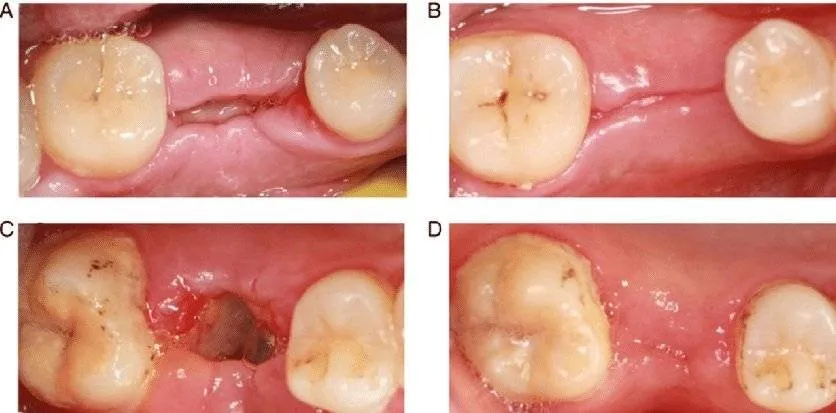
- Pain and swelling decrease progressively after Day 2.
- The socket fills with a dark blood clot, which is then replaced by pinkish granulation tissue.
- No severe, throbbing pain that radiates to your ear.
- No bad taste or persistent foul odor.
Dry Socket vs. Normal Healing Pain
Dry socket (alveolar osteitis) occurs in approximately 2% to 5% of simple extractions and up to 30% of impacted lower wisdom tooth extractions. It occurs when the initial blood clot fails to form, dislodges, or dissolves prematurely, leaving bone and delicate nerve endings exposed to air, food, and bacteria.
| Feature | Normal Healing Pain | Dry Socket Pain |
|---|---|---|
| Onset | Immediate; peaks on Days 1–2 then decreases. | Sudden onset between Days 3 and 5. |
| Intensity & Quality | Dull, manageable ache; improves with OTC meds. | Severe, throbbing pain unresponsive to painkillers. |
| Radiation | Localized strictly to the extraction socket. | Radiates to ear, eye, temple, jaw, or neck. |
| Socket Appearance | Filled with dark clot or pink/white tissue. | Visible empty, dry-looking socket or exposed bone. |
| Odor / Taste | Neutral or mild metallic taste early on. | Foul odor and persistent bitter/foul taste. |
Why Extraction Sites Throb Worse at Night
Many patients report that pain surges in the evening or when lying down. Key physiological factors explain this pattern:
- Increased Cranial Blood Pressure: Lying flat elevates blood pressure in the head, causing increased throbbing and swelling around sensitive socket tissues. Solution: Propping your head up with 2–3 pillows reduces vascular pressure.
- Circadian Inflammatory Response: Immune cell activity and cytokine releases naturally surge at night, intensifying local inflammation.
- Fewer Sensory Distractions: Quiet environments increase focus on internal pain cues.
- Analgesic Gaps: Pain medications taken during dinner often wear off by bedtime. Timing your dose 30 minutes before sleep helps maintain coverage.
Additional Complications: Nerve Irritation, Retained Fragments & Sinus Issues
- Nerve Irritation / Damage (Paresthesia): Extraction of impacted lower wisdom teeth near the inferior alveolar or lingual nerve can lead to prolonged numbness, tingling, or electric-shock sensations in the chin, lip, or tongue lasting beyond 24 hours. Most cases resolve over weeks, but prompt evaluation by your surgeon is required.
- Retained Bone or Tooth Fragments: Tiny bone splinters (sequestra) or root tips left behind can cause localized inflammation, sharp discomfort, or feeling a rough edge under the gum. Your dentist can easily flush or lift these out.
- Sinus Perforation (Upper Molars): Roots of upper molars sit close to the maxillary sinus cavity. A sinus communication can cause air bubbling into the socket, fluid passing from mouth to nose, or sinus pressure.
🚨 RED FLAGS: SEE A DENTIST IMMEDIATELY
Contact your oral surgeon or dentist immediately if you experience any of the following symptoms:
- Severe, escalating pain starting on or after Day 3 that isn’t relieved by prescribed or OTC pain medication.
- Fever over 100.4°F (38°C) or chills signaling systemic infection.
- Active, continuous bleeding that saturates gauze pads after 2 hours of direct pressure.
- Pus or yellowish/green discharge oozing from the extraction site.
- Worsening cheek or neck swelling after Day 3, or swelling that makes swallowing or breathing difficult (seek emergency care).
- Persistent lip, chin, or tongue numbness lasting longer than 24 hours.
Warning Signs: When to Call Your Dentist
Contact your dentist immediately if you experience any of the following, as they could be signs of infection:
- Severe or Increasing Pain: Pain that suddenly gets worse around Day 3-5, or throbbing pain that doesn’t improve with medication.
- Signs of Complications: Looking into the socket and seeing exposed, white bone instead of a dark clot or pink tissue.
- Pus or Discharge: Any
pus(yellow or white fluid) coming from the socket. - Persistent
Redness Around Extraction Site: While some redness is normal, redness and swelling that worsen after Day 3 are warning signs. - Fever: A
feveris a classic sign of infection.
Consulting Your Local Dental Professionals
Post-operative care and recovery protocols can vary slightly based on regional guidelines, whether advised by the Texas Dental Association, the North Texas Dental Society, or national bodies like the NHS.
Regardless of your location—whether you reside in Rockwall, Germantown, Norwood Park, or Whitestone—it is crucial to follow the specific instructions of your provider.
🩹 Quick relief kit — Find immediate comfort and manage post-extraction discomfort safely with these essential recovery supplies.
- Advil Dual Action Pain Reliever Caplets with Acetaminophen and IbuprofenCombines two proven pain relievers to manage post-extraction dental pain.
- REVIX Wisdom Teeth Ice Pack Head WrapProvides hands-free cold compression to reduce jaw swelling and facial pain.
- Medline Sterile 4×4 Non-Woven Gauze SpongesHelps control bleeding and maintain clean pressure on the extraction site.
- samply Wisdom Teeth Ice Pack Head WrapHands-free adjustable wrap with 4 gel packs, cools both cheeks at once for TMJ and post-extraction swelling.
Affiliate links. Not medical advice — see a dentist for severe or worsening pain.
🧮 Free tool: Check your personal dry socket risk score in 60 seconds.
Dangerous home “hacks” to avoid
- Aspirin on the gum or tooth. Aspirin is an acid; it chemically burns the gum and does nothing for the pain. Swallow pain relievers as the label directs, never place them.
- Undiluted clove oil on an open wound or socket. A trace on a tooth can numb briefly; neat clove oil on gum tissue or a fresh socket causes burns and delays healing.
- Rinsing with alcohol, whisky, or hydrogen peroxide. They dry and irritate tissue, disturb a healing clot, and interact with pain relievers. Warm salt water is enough.
- Popping or draining a swelling yourself. Pushing on an abscess can spread the infection. Cold outside the cheek, and a dentist today.
- Leftover or borrowed antibiotics. They mask symptoms for a few days, breed resistant bacteria, and the tooth still needs treatment.
- Heat on a swollen face. Heat increases blood flow and swelling around an infection; use cold until a dentist has seen it.
Frequently Asked Questions (FAQ)
Q: How long is the recovery time?
A: Initial healing (gum tissue closing) takes about 1-2 weeks. However, the underlying bone can take 3-6 months to fully heal and remodel.
Q: How do I prevent losing the blood clot?
A: The best way is to protect the extraction area. For the first 3 days, do not smoke, do not drink through a straw, and avoid vigorous spitting or rinsing.
Q: When can I eat normally?
A: You should stick to soft foods for the first few days. Most people can return to a relatively normal diet (while avoiding the extraction site) after one week.
Q: What can I safely eat 7 days after wisdom teeth removal?
A: By Day 7, you can expand to fork-tender foods such as scrambled eggs, soft pasta, flaky fish, soft chicken, well-cooked vegetables, and mashed potatoes. Continue avoiding hard chips, nuts, seeds, and crunchy snacks.
Q: When is it safe to drink alcohol after a tooth extraction?
A: Wait a bare minimum of 48 to 72 hours, but ideally 7 to 10 days until gum tissue stabilizes. Never consume alcohol while taking narcotic pain medications, high-dose NSAIDs, or antibiotics (wait at least 72 hours after your final dose of antibiotics like metronidazole).
Q: When can I whiten my teeth after tooth extraction?
A: You should wait at least 4 to 6 weeks until your gums have completely closed and healed before using teeth whitening strips, gels, or bleaching kits to avoid severe chemical irritation to healing socket tissue.
Q: Is it normal to still have pain 5 days after a tooth extraction?
A: Mild soreness or aching on Day 5 is normal, especially for complex or molar extractions. However, intense, throbbing, or worsening pain on Day 5 is not normal and strongly points toward dry socket or infection.
Q: Why is my pain lingering after 7 to 10 days?
A: By Days 7–10, discomfort should be minimal. Lingering pain can stem from localized infection, retained bone spicules, underlying medical conditions delaying healing (e.g., uncontrolled diabetes), or trauma to adjacent teeth during surgery.
Q: What should I do if my chin or tongue feels numb days after wisdom tooth removal?
A: Lingering numbness or tingling (paresthesia) indicates irritation to nerve pathways near the socket. Contact your oral surgeon for a sensory evaluation.
The Dental Recovery & Savings Bundle gives you a day-by-day recovery calendar (what’s normal, what to eat, when to call your dentist), plus 4 scripts to lower your next dental bill. Instant PDF, $12, 30-day money-back promise.
Get the recovery bundle →
Conclusion
Your dental recovery journey requires patience. By following your dentist’s aftercare instructions and monitoring the site day by day, you can ensure a smooth, normal recovery. Trust the process, protect the clot, and rely on visual guides to know exactly what to look for.