Same Day Dentures: Process, Cost & Healing (2026)
Same day dentures explained: how immediate dentures work, the process, relines as gums heal, typical 2026 US cost, and how they compare to permanent ones.
✅ Quick answer
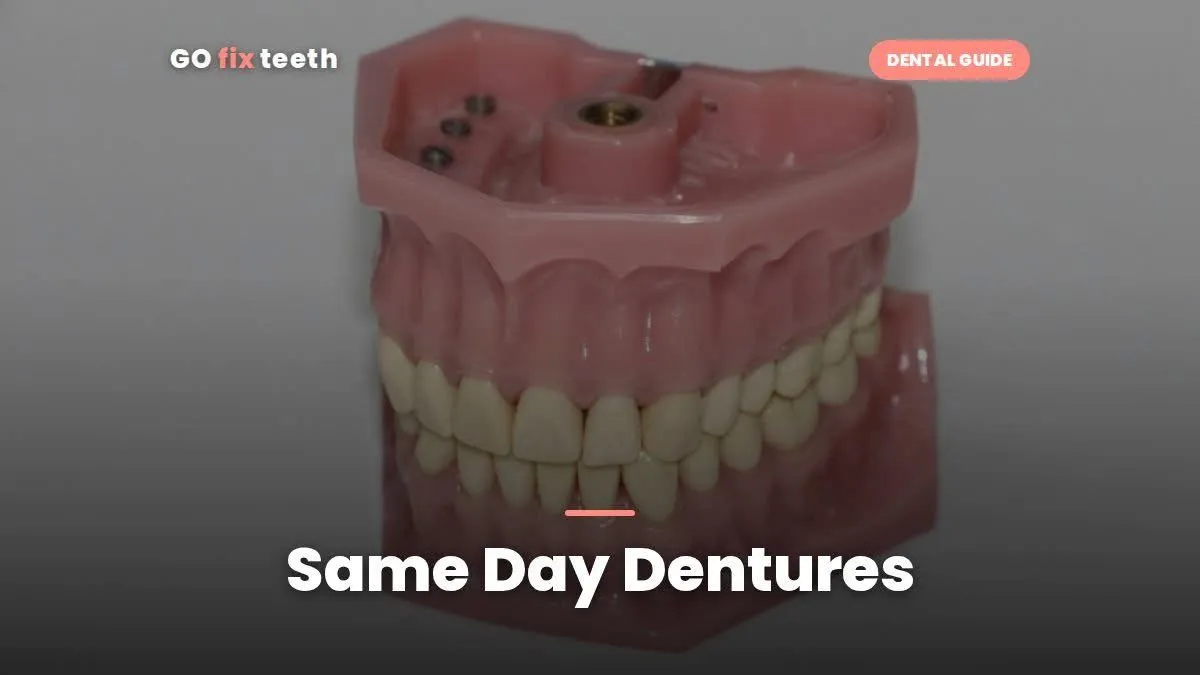
Same day dentures, also called immediate dentures, are made before your teeth are pulled and placed right after the extractions, so you never leave the office without teeth. Because your gums and bone shrink as they heal, they usually need soft relines in the first months and a hard reline or new denture after about 6 to 12 months. They typically cost about $1,500 to $4,000 per arch without insurance, not counting extractions. Typical 2026 US estimates; they vary by region and insurance.
Losing all your teeth on one arch is a big step, and few people want to spend weeks with no teeth while their mouth heals. Same day dentures solve that problem. You walk in with your natural teeth and walk out with a full set of false teeth on the same day.
The trade-off is that the fit changes as you heal. This guide explains the process, what the first year looks like, typical costs in 2026, and how same day dentures compare with conventional and permanent options.
📩 Important: after you sign up, open the email from Go Fix Teeth and tap Confirm. Your PDF opens right away. Not there? Check Spam or Promotions.
Same day dentures at a glance

| Item | Typical cost (no insurance) | Notes |
|---|---|---|
| Immediate denture | $1,500–$4,000/arch | Placed after extractions |
| Extractions | $150–$600/tooth | Higher if surgical |
| Soft reline | $200–$500 | Often in first months |
| Hard reline | $300–$700 | After about 6–12 months |
| New final denture | $1,500–$4,000/arch | Optional instead of reline |
Typical 2026 US estimates; they vary by region and insurance. Some offices bundle the extractions, the first adjustments and one reline into a package price, while others bill each part separately. Ask what is included.
How the same day denture process works
1. Exam and planning
The dentist examines your mouth, takes X-rays, and decides which teeth need to come out. You talk about the shape, shade and size of the new teeth.
2. Impressions and records
Impressions or digital scans are taken while your natural teeth are still in place, along with bite records. The lab uses these to build a denture that predicts how your mouth will look once the teeth are gone. This usually happens a few weeks before surgery.
3. Extraction day
The remaining teeth are removed under local anesthetic, sometimes with sedation. The immediate denture is placed right away. It acts like a bandage, helping control bleeding and protecting the sockets. Your dentist will usually ask you to keep it in for the first 24 hours or so. For a closer look at this day, see our guide to full mouth extraction with immediate dentures.
4. Follow-up visits
You go back the next day or within a few days so the dentist can check healing and ease sore spots. More adjustment visits follow over the next weeks.
5. Relines or a final denture
As the gums shrink, the denture gets loose. A soft liner may be added to keep it snug while you heal. Once healing has settled, usually after 6 to 12 months, you get a hard reline or a new, conventional denture.
Why relines are part of the plan
After teeth are removed, the bone and gum that held them reshape and shrink. Most of this change happens in the first several months. A denture made before extractions cannot match the final shape of your gums, so some loosening is expected, not a sign that something went wrong.

If you skip relines, a loose denture can rub and cause sores, slip when you talk, and make chewing harder. Over the long run, a poorly fitting denture may also speed up bone loss. Budget for at least one reline when you compare quotes.
Useful on Amazon for this job
As an Amazon Associate we earn from qualifying purchases. Always confirm fit for your exact vehicle or ask your dentist.
The Dental Recovery & Savings Bundle includes a printable day-by-day recovery calendar for the first days after your teeth come out, plus 4 ready-to-use scripts to lower your dental bill so you can ask about package pricing, relines and payment plans before you commit. Instant PDF, $12, 30-day money-back promise.
Get the recovery bundle →
Pros and cons of same day dentures
Advantages
- No time without teeth. You can go back to work and social life sooner.
- Protects the healing area. The denture can help control bleeding and swelling in the first day.
- Time to adapt. You learn to speak and eat with dentures while you heal.
- Your dentist can copy your old smile if you liked the shape of your natural teeth.
Disadvantages
- Fit changes. More adjustment visits and relines are needed.
- No try-in. You can’t see the exact final look before the teeth come out, unlike a conventional denture.
- Higher total cost when you add relines or a second denture.
- Soreness at first, because the denture sits on fresh extraction sites.
Same day dentures vs conventional and permanent dentures
A conventional denture is made after the gums have healed, usually 8 to 12 weeks after extractions. It fits better from the start and lets you try the teeth in wax first, but you go without teeth during healing.
Permanent dentures are fixed to dental implants and are not removed at home. They feel more like natural teeth and help preserve bone, but they cost much more and need surgery and healthy bone. Some offices place implants and a temporary fixed set on the same day as the extractions. Read our guide to permanent dentures and same day tooth extraction and implant to compare.
Many people start with immediate dentures and later move to implants once they’ve healed and saved up. Your dentist can plan for that from the start.
Full vs partial immediate dentures
Same day dentures are not only for people losing every tooth. If you are keeping some healthy teeth, your dentist can make an immediate partial denture that replaces only the teeth being pulled. It clips to the teeth you keep and follows the same idea: placed on extraction day, adjusted as you heal, and relined or replaced later. Immediate partials are often acrylic, because acrylic can be relined and have teeth added if more are lost.
Keeping even a few healthy teeth can help support a denture and may keep more of your own bite feeling. Ask your dentist whether any teeth can be saved before you agree to a full set. Our before and after partial dentures guide shows what a partial can look like, and how to replace a missing tooth covers the other options if only a few teeth need replacing.
Tips for the first weeks
- Follow your dentist’s instructions on when to first take the denture out.
- Eat soft, cool foods at first, cut into small pieces, and chew on both sides.
- Avoid very hot drinks, alcohol, smoking and using straws while the sockets heal, unless your dentist says otherwise.
- Rinse gently as directed and clean the denture daily once you are allowed to remove it.
- Keep every follow-up visit, even if things feel fine.
- Read words aloud to get used to speaking with the new teeth.
See a dentist promptly if…
- A sore spot doesn’t improve after a few days or gets worse
- The denture feels very loose or rocks when you bite
- Pain increases a few days after extractions instead of easing
- You notice a bad taste, pus or swelling around a socket
Seek emergency care right away, or call 911, for bleeding that won’t stop with firm pressure, swelling of the face or neck that is spreading, fever, or trouble swallowing or breathing.
Frequently asked questions
How much do same day dentures cost?
Typically about $1,500 to $4,000 per arch in the US in 2026, plus extractions and relines. Package deals vary widely.
Do same day dentures hurt?
The extractions are done with anesthetic. Expect soreness for several days afterward, which your dentist will help you manage.
How long do immediate dentures last?
Many people use them only until healing is done, then reline or replace them. With a hard reline, some people keep them for several years.
Can I sleep in my immediate denture?
Usually only on the first night if your dentist asks. After that, most dentists advise taking dentures out at night to rest the gums.
Does insurance cover same day dentures?
Many plans cover dentures as a major service at around 50%, up to the annual maximum. Ask about replacement rules before you get a second denture.
Sources
- MedlinePlus. Dental Health.
- Cleveland Clinic. Dental Implants.
- American Dental Association, MouthHealthy. Implants.
- National Institute of Dental and Craniofacial Research. Finding Low-Cost Dental Care.
This article is for general education and does not replace advice from your dentist, who can examine your mouth and plan the right treatment for you.