Flexible Dentures: Pros, Cons, Cost & Care (2026)
Flexible dentures (flexi false teeth) explained: how nylon partials work, pros and cons, 2026 US cost, who they suit, daily care and repair limits.
✅ Quick answer
Flexible dentures are removable false teeth made from a thin, bendable nylon-type resin (Valplast is one well-known brand) that grips your natural teeth with gum-colored clasps instead of metal hooks. They are mostly used as partial dentures, are comfortable and hard to spot, and typically cost about $900 to $2,500 per arch without insurance, but they are harder to repair or add teeth to than acrylic or metal partials. Typical 2026 US estimates; they vary by region and insurance.
If you are missing a few teeth and dislike the idea of metal clasps showing when you smile, flexible dentures often come up as an option. People also call them “flexi false teeth” or soft partials. They look good and feel light, but they are not the best fit for every mouth.
This guide explains what flexible dentures are made of, how they compare with other partials, what they usually cost in 2026, who tends to do well with them, and how to care for them so they last.
📩 Important: after you sign up, open the email from Go Fix Teeth and tap Confirm. Your PDF opens right away. Not there? Check Spam or Promotions.
Flexible dentures at a glance
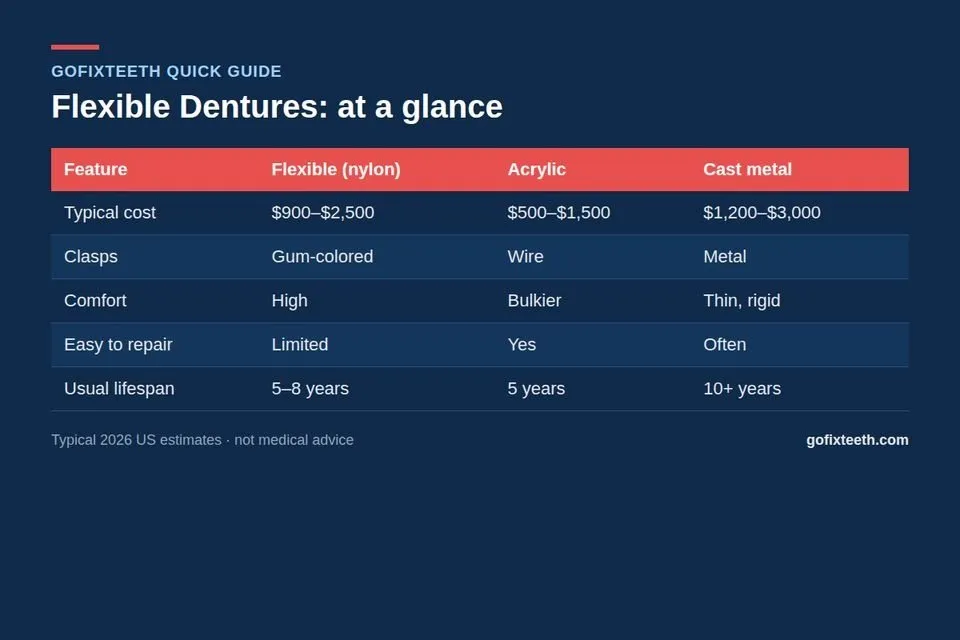
Here is how a flexible partial stacks up against the two other common types of removable partial denture:
| Feature | Flexible (nylon) | Acrylic | Cast metal |
|---|---|---|---|
| Typical cost | $900–$2,500 | $500–$1,500 | $1,200–$3,000 |
| Clasps | Gum-colored | Wire | Metal |
| Comfort | High | Bulkier | Thin, rigid |
| Easy to repair | Limited | Yes | Often |
| Usual lifespan | 5–8 years | 5 years | 10+ years |
Typical 2026 US estimates; they vary by region and insurance. Lifespan depends heavily on care, changes in your gums, and whether you lose more teeth. For a deeper cost comparison, see our guide to partial dentures cost.
What are flexible dentures made of?
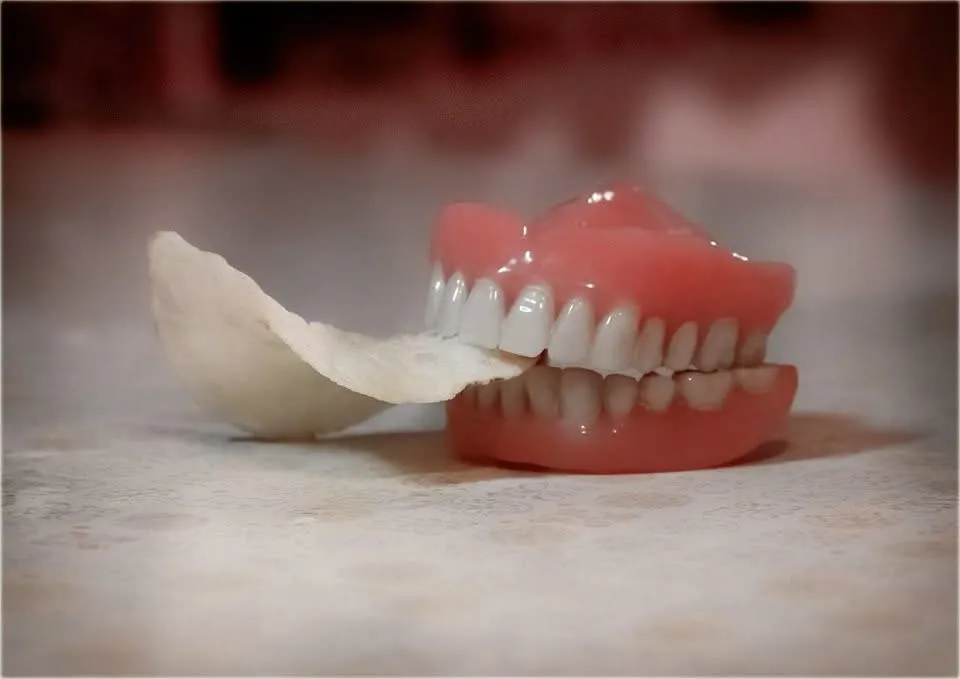
Most flexible dentures are made from a thermoplastic nylon resin. The lab heats the material and injects it into a mold of your mouth, instead of packing and curing hard acrylic. The result is a base that bends slightly under pressure and returns to shape.
The plastic teeth are set into this base, and the clasps are part of the same piece. They wrap around your natural teeth near the gumline and blend in with the gum color. Because there is no metal framework, the denture is light and has no metal taste.
Some labs make “combination” partials with a thin metal frame and flexible clasps, which try to mix strength with looks. Ask your dentist which design they plan to use, since the price and repair options differ.
Pros and cons of flexible dentures
Advantages
- Look natural. No metal clasps flash when you talk or smile.
- Comfortable. The thin, slightly soft base can feel less bulky, and there are fewer hard edges to rub sore spots.
- Light and less likely to snap. If dropped on a hard floor, a nylon partial is less likely to crack than acrylic.
- Metal-free. Useful for people who prefer to avoid metal or have a known sensitivity to acrylic monomer, which your dentist can confirm.
- Little tooth preparation. Natural teeth usually don’t need to be shaped for rests as much as they might for a metal partial.
Disadvantages
- Hard to repair or adjust. Many labs can’t reline or add a tooth to nylon the way they can with acrylic. If you lose another tooth, you may need a new partial.
- Less support when chewing. Because the base flexes, some people find biting hard foods less stable than with a rigid metal partial.
- Can stain and roughen. The surface can pick up stains and odors over time if not cleaned well.
- Bulky clasps on some teeth. Pink clasps cover more gum than a thin wire, which bothers a few people.
- Not ideal for every case. Mouths with very little natural tooth support or a lot of missing teeth may do better with another design.
How much do flexible dentures cost?
A flexible partial for one arch typically runs about $900 to $2,500 without insurance in 2026. A small unit replacing one or two teeth (sometimes called a flexible flipper) can be at the lower end, often about $500 to $1,200. A full flexible denture is less common and priced similarly to a premium partial.
Your quote may also include an exam, X-rays and impressions. If teeth need to be pulled first, extraction fees are added. Typical 2026 US estimates; they vary by region and insurance.
Dental insurance often lists dentures as a “major” service and may pay around 50% after the deductible, up to the annual maximum. Some plans pay only the rate of a standard acrylic partial, leaving you to cover the difference for a flexible one. Ask for a pre-treatment estimate before the impressions are taken.
Useful on Amazon for this job
As an Amazon Associate we earn from qualifying purchases. Always confirm fit for your exact vehicle or ask your dentist.
The Dental Recovery & Savings Bundle includes 4 ready-to-use scripts to lower your dental bill, so you can ask about cash discounts, insurance downgrades and payment options with confidence. It also comes with a printable day-by-day recovery calendar if extractions come first. Instant PDF, $12, 30-day money-back promise.
Get the savings scripts →
Who are flexible dentures best for?
Flexible partials tend to work well for people who:
- Are missing one to a few teeth and still have healthy, stable teeth to hold the clasps
- Care a lot about how the denture looks, especially near the front of the mouth
- Want a lighter, more comfortable option, or found a metal or acrylic partial irritating
- Need a temporary or medium-term solution while they save for an implant or bridge
They may be a weaker choice if you have gum disease that is likely to lead to more tooth loss, very short or loose remaining teeth, or a heavy bite. In those cases a cast metal partial, a bridge or implants may last longer. Our guide on how to replace a missing tooth walks through the options.
Getting used to a flexible partial
Most people adapt to a flexible partial within a week or two. At first it can feel tight as the clasps settle around your teeth, and you may notice more saliva or a slight change in how some words sound. These usually ease as your tongue and cheeks get used to it.
Practice putting it in and taking it out in front of a mirror. Press it into place with your fingers rather than biting it down, which can bend or crack the clasps. Start with soft foods, chew on both sides, and slowly add firmer foods. If a sore spot appears, don’t wait it out for weeks; a quick adjustment visit is usually all it takes.
Before a partial is made, it also helps to have your remaining teeth cleaned and any decay treated, since the partial will depend on them for years. If you are due for a cleaning, see how much a dental cleaning costs without insurance.
How to care for flexible dentures
- Rinse after meals to remove food from the clasps.
- Clean daily with a soft brush and a non-abrasive cleaner made for dentures. Regular toothpaste can scratch the surface.
- Soak in a cleaner meant for nylon dentures. Some standard tablets aren’t recommended for flexible materials, so check the label or ask your dentist.
- Avoid hot water. Very hot water can warp the material.
- Take it out at night unless your dentist tells you otherwise, and keep it moist.
- Brush your natural teeth well. Decay and gum disease on the teeth holding the clasps are a common reason partials stop fitting.
- Don’t adjust it yourself. Bending clasps at home can break or distort them.
Repair limits to know before you buy
This is the main trade-off. Acrylic partials can be relined as your gums shrink and can usually have a tooth added. With many nylon partials, a lab may be able to fix a broken clasp or tooth, but relines and additions are harder and not every lab offers them. If your dentist expects you to lose more teeth in the next few years, ask whether a design that can be added to makes more sense.
See a dentist promptly if…
- The partial rubs and causes a sore spot that doesn’t heal within a few days
- The fit feels loose, rocks when you chew, or clicks
- A natural tooth holding a clasp becomes loose or painful
- The denture cracks or a clasp breaks
See a dentist or doctor promptly for any mouth sore that lasts more than two weeks. Seek emergency care, or call 911, for facial swelling that is spreading, fever with mouth pain, or trouble swallowing or breathing.
Frequently asked questions
Are flexible dentures better than regular dentures?
They look better and often feel more comfortable, but they are harder to repair and may be less stable for chewing. “Better” depends on your mouth and goals.
How long do flexible dentures last?
Many last around 5 to 8 years with good care, though changes in your gums or teeth can shorten that.
Can you eat with flexible dentures?
Yes. Start with soft foods cut into small pieces, then add firmer foods as you get used to it. Very hard or sticky foods can loosen or damage it.
Can flexible dentures be relined?
Sometimes, but many labs can’t reline nylon the way they reline acrylic. Ask your dentist before treatment.
Are flexi false teeth covered by insurance?
Often in part, as a major service. Some plans only pay the acrylic rate, so expect to cover the difference.
Sources
- MedlinePlus. Dental Health.
- MedlinePlus. Tooth Disorders.
- National Institute of Dental and Craniofacial Research. Finding Low-Cost Dental Care.
This article is for general education and does not replace advice from your dentist, who can examine your mouth and recommend the right type of denture.