Dental Bone Graft Cost (2026): Types, Insurance and Recovery
Dental bone graft cost in 2026: socket preservation, ridge augmentation, sinus lift and block graft prices, plus graft materials, insurance and recovery.
✅ Quick answer
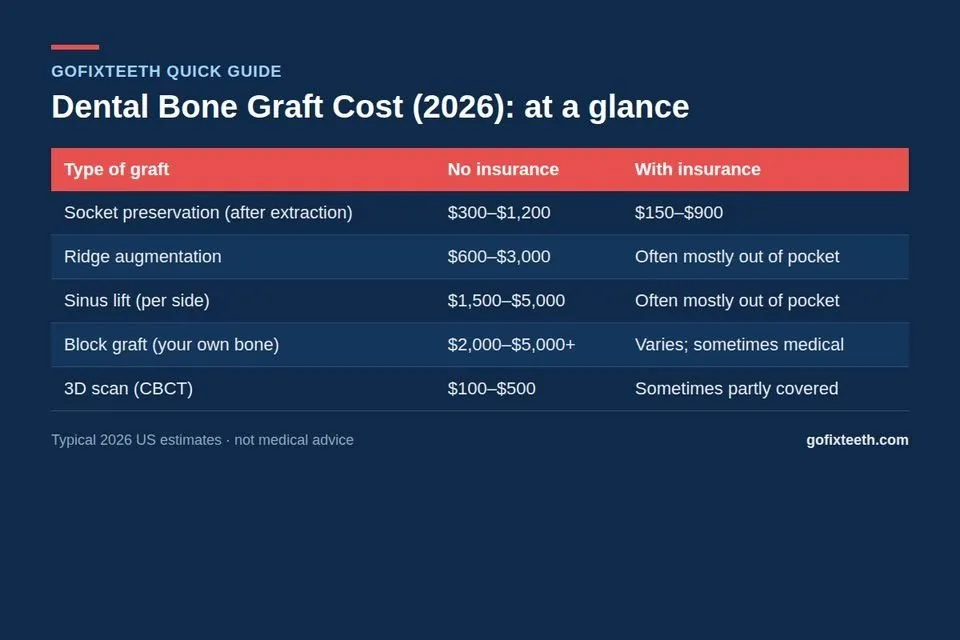
A dental bone graft typically costs about $300 to $1,200 for a socket preservation graft placed right after an extraction, about $600 to $3,000 for ridge augmentation, and about $1,500 to $5,000 for a sinus lift per side in the US in 2026. Larger block grafts using your own bone can run $2,000 to $5,000 or more. Many dental plans pay little or nothing when the graft is for an implant, so ask for a written estimate. Typical 2026 US estimates; they vary by region and insurance.
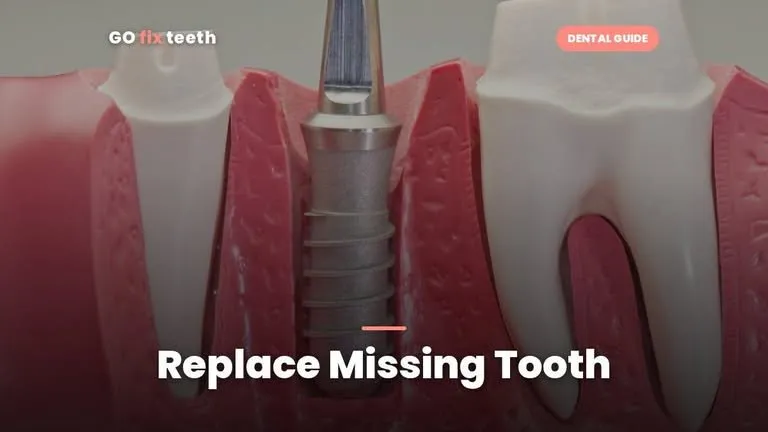
If your dentist mentions a bone graft, it usually means one thing: there isn’t enough healthy jawbone in an area to hold an implant, or there soon won’t be. Bone in the jaw tends to shrink after a tooth is lost, and gum disease or infection can wear it away too. A graft adds material that your body gradually replaces with its own bone, building a stronger foundation.
This guide explains the main types of dental bone grafting, the materials used, typical prices, how insurance usually handles it, what recovery is like and when you’re most likely to need one.
📩 Important: after you sign up, open the email from Go Fix Teeth and tap Confirm. Your PDF opens right away. Not there? Check Spam or Promotions.
How much does a dental bone graft cost? (2026 prices)
| Type of graft | No insurance | With insurance |
|---|---|---|
| Socket preservation (after extraction) | $300–$1,200 | $150–$900 |
| Ridge augmentation | $600–$3,000 | Often mostly out of pocket |
| Sinus lift (per side) | $1,500–$5,000 | Often mostly out of pocket |
| Block graft (your own bone) | $2,000–$5,000+ | Varies; sometimes medical |
| 3D scan (CBCT) | $100–$500 | Sometimes partly covered |
Typical 2026 US estimates; they vary by region and insurance. The price depends on how much bone is needed, the material, whether a protective membrane is used, who does the procedure (general dentist, periodontist or oral surgeon) and whether sedation is added. A graft done at the same visit as an extraction is usually much less than a separate surgery later.
Types of dental bone grafting
Socket preservation
This is the most common and least expensive graft. Right after a tooth is pulled, the dentist fills the empty socket with graft material and often covers it with a membrane. The goal is to limit the bone shrinking that normally happens after an extraction, so an implant can be placed a few months later. It adds only a short time to the extraction visit.
Ridge augmentation
If a tooth has been missing for a while, the ridge of bone where it sat can become too thin or too short for an implant. Ridge augmentation builds up the width or height of that area. The gum is opened, graft material is added and covered with a membrane, and the area heals for several months before the implant.
Sinus lift (sinus augmentation)
The upper back teeth sit just below the sinuses. After those teeth are lost, the bone between the mouth and the sinus can be too thin. A sinus lift gently raises the sinus membrane and places graft material underneath to make room for implants. It’s one of the more involved and costly grafts, and it’s usually done by an oral surgeon or periodontist.
Block graft
For larger defects, a solid piece of bone may be taken from another spot, often the chin or the back of the lower jaw, and secured with small screws. This means two surgical sites, so it costs more and takes longer to heal. Severe cases needing bone from the hip or another part of the body are usually done in a hospital setting.
Bone graft materials: what’s in a graft?
- Autograft (your own bone). Taken from another area of your mouth or body. It heals well because it’s your own tissue, but it needs a second surgical site.
- Allograft (human donor bone). Processed and sterilized donor bone from a tissue bank. It’s widely used, especially for socket preservation, and avoids a second site.
- Xenograft (animal bone). Usually processed cow (bovine) bone, sometimes pig. It acts as a long-lasting scaffold for your own bone to grow into.
- Synthetic (alloplast). Lab-made materials such as calcium phosphate or bioactive glass. These avoid human or animal sources.
Your dentist chooses the material based on the size of the defect, timing and their experience. Many grafts combine materials. If you have a personal or religious concern about donor or animal products, say so before the procedure, since there are alternatives. Some offices also use growth factors made from your own blood, which can add to the price.
When do you need a bone graft before an implant?
Not everyone does. An implant needs enough bone around it to be stable, and a 3D scan shows whether you have it. A graft is more likely if:
- A tooth has been missing for months or years
- You had gum disease that caused bone loss
- A tooth was removed because of a large infection or a cracked root
- The implant site is in the upper back jaw near the sinus
- You’ve worn a denture for a long time
- The area matters for appearance, like a front tooth, where the gum line needs support
Sometimes the graft and implant can be placed in the same surgery. Other times, the graft needs to heal first. If you’re getting a tooth pulled and think you might want an implant later, ask about socket preservation now. It’s often the cheapest point to protect the bone.
Useful on Amazon for this job
As an Amazon Associate we earn from qualifying purchases. Always confirm fit for your exact vehicle or ask your dentist.
The Dental Recovery & Savings Bundle includes 4 ready-to-use scripts to lower your dental bill, so you know what to say when you ask about cash pricing, phasing treatment or a payment plan for grafting and implant work. You also get a printable day-by-day recovery calendar for the days after your procedure. Instant PDF, $12, 30-day money-back promise.
Get the savings scripts →
Does insurance cover dental bone grafts?
Coverage is mixed. Some dental plans pay part of a socket graft placed at the time of an extraction, often as a basic or major service. Many plans don’t cover implants, and when the graft is only needed to place an implant, they may deny it too. Even when it’s covered, a big graft plus an implant can quickly use up a plan’s annual maximum, which is often $1,000 to $2,000.
Medical insurance sometimes helps when bone loss comes from an accident, tumor removal or a medical condition rather than routine tooth loss. Original Medicare generally doesn’t cover dental grafting, though some Medicare Advantage plans include limited dental benefits. Before you schedule, ask the office to send a pre-treatment estimate to your insurer so you know your share.
Ways to lower the cost
- Graft at the time of extraction if an implant is likely; it usually costs less than a ridge graft later.
- Compare quotes. Prices vary between general dentists, periodontists and oral surgeons.
- Dental schools and graduate periodontics or oral surgery programs often charge lower fees.
- Ask for the cash price and whether the membrane, scan and follow-up are included.
- Use an FSA or HSA to pay with pre-tax money.
- Ask about phasing. Spreading treatment across two plan years can use two annual maximums.
- Consider alternatives. If grafting isn’t affordable, a bridge or partial denture may not need extra bone.
Bone graft recovery: what to expect
A small socket graft usually feels much like the extraction itself: some soreness and swelling for a few days that improves with over-the-counter pain relievers or what your dentist prescribes. Larger grafts and sinus lifts can cause more swelling and bruising for about a week.
- It’s normal to notice a few small, sand-like granules in your mouth during the first days.
- Eat soft foods and chew on the other side.
- Avoid smoking, which can lower the chance of the graft taking.
- After a sinus lift, avoid blowing your nose hard and sneeze with your mouth open, as instructed.
- Take any antibiotics or rinses exactly as prescribed.
Your gum heals in a couple of weeks, but the bone needs much longer. Many grafts are given about 3 to 6 months, sometimes longer for sinus lifts and block grafts, before an implant is placed.
See a dentist promptly if…
- Pain or swelling gets worse after day 3 instead of better
- A lot of graft material is coming out, or the membrane is exposed
- You notice pus, a bad taste or a foul smell from the site
- After a sinus lift, you have nosebleeds that don’t stop or sinus pain and congestion that keeps worsening
Seek emergency care right away, or call 911, for facial swelling that is spreading, high fever, heavy bleeding that won’t stop, or trouble swallowing or breathing.
Frequently asked questions
How much is a bone graft for a dental implant?
For a single tooth, often about $300 to $1,200 for a socket graft or $600 to $3,000 for ridge augmentation in the US in 2026. A sinus lift typically costs more.
Is a dental bone graft painful?
The procedure is done with numbing and sometimes sedation. Afterward, most people have mild to moderate soreness for a few days.
How long does a bone graft take to heal?
The gum usually heals in one to two weeks. The bone typically needs about 3 to 6 months before an implant, sometimes longer.
Can I get an implant without a bone graft?
Yes, if a scan shows enough healthy bone. Some people can also use shorter or narrower implants instead of grafting.
Is a bone graft always needed after an extraction?
No. It’s mainly recommended if you plan an implant or the site matters for appearance. Ask whether it’s needed in your case.
Can a bone graft fail?
Sometimes, especially with smoking, infection or uncontrolled diabetes. A failed graft may need to be cleaned out and redone.
Sources
- Cleveland Clinic. Dental Bone Graft.
- Cleveland Clinic. Dental Implants.
- MedlinePlus. Tooth Extraction.
- National Institute of Dental and Craniofacial Research. Finding Low-Cost Dental Care.
This article is for general education and does not replace advice from your dentist, who can examine your jawbone and give you an exact treatment plan and quote.