How Long Does Dental Numbing Last? Times by Anesthetic
How long dental numbing lasts after a filling or extraction: lidocaine, articaine, mepivacaine and bupivacaine times, upper vs lower jaw, and when to call.
✅ Quick answer
Dental numbing usually lasts about 2 to 5 hours in your lip, cheek and tongue, even though the tooth itself is fully numb for only about an hour. Upper teeth often wear off sooner, while a lower jaw nerve block can last 3 to 5 hours. Long-acting bupivacaine can keep you numb for up to 8 hours or more, and plain anesthetics without epinephrine may wear off in 1 to 2 hours. Numbness that’s still there the next day should be reported to your dentist.
You leave the dental office with half your face feeling like it belongs to someone else. It’s a common question: how long until this wears off so you can eat, talk normally and stop drooling coffee? The answer depends on which anesthetic was used, whether it contained epinephrine, how much was given and where in your mouth the work was done.
This guide explains typical numbing times for the most common dental anesthetics, why the lower jaw stays numb longer, what actually helps it wear off, and the rare situations when lasting numbness is a reason to call your dentist.
📩 Important: after you sign up, open the email from Go Fix Teeth and tap Confirm. Your PDF opens right away. Not there? Check Spam or Promotions.
Typical numbing times by anesthetic
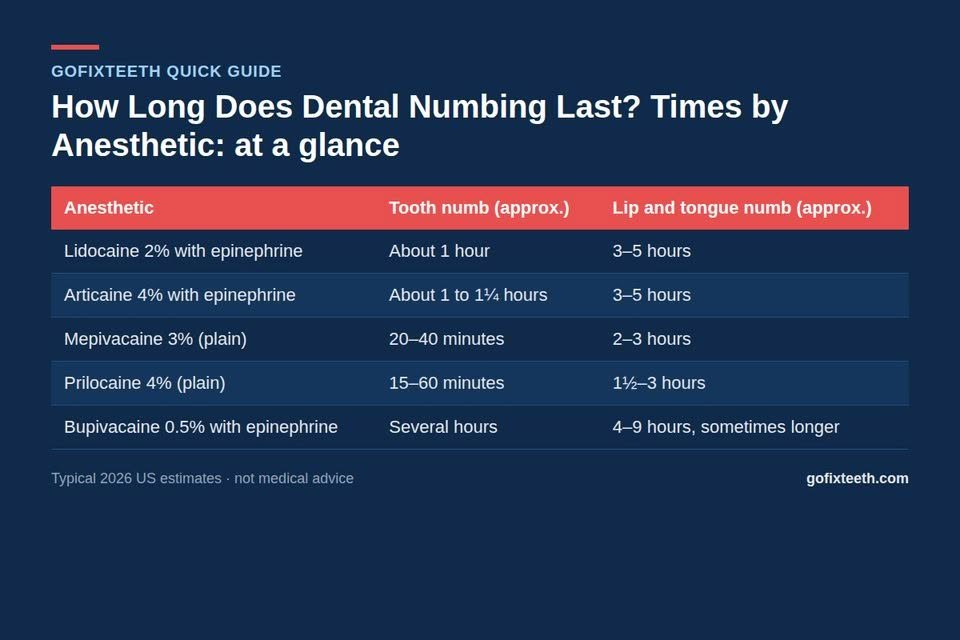
| Anesthetic | Tooth numb (approx.) | Lip and tongue numb (approx.) |
|---|---|---|
| Lidocaine 2% with epinephrine | About 1 hour | 3–5 hours |
| Articaine 4% with epinephrine | About 1 to 1¼ hours | 3–5 hours |
| Mepivacaine 3% (plain) | 20–40 minutes | 2–3 hours |
| Prilocaine 4% (plain) | 15–60 minutes | 1½–3 hours |
| Bupivacaine 0.5% with epinephrine | Several hours | 4–9 hours, sometimes longer |
Approximate ranges from typical dental use; your own times can be shorter or longer. “Tooth numb” is how long the tooth itself can’t feel the drill. “Lip and tongue numb” is the soft-tissue numbness you notice after leaving, which nearly always outlasts the tooth numbness. Upper-jaw injections usually fall toward the shorter end, and lower nerve blocks toward the longer end.
The common dental anesthetics, explained
Lidocaine
Lidocaine is the classic dental anesthetic in the US and the one most people have had. It’s usually mixed with a small amount of epinephrine. It’s a reliable choice for fillings, crowns and extractions.
Articaine
Articaine is also very widely used. It spreads through bone well, so many dentists like it for upper teeth and for infiltration injections near lower teeth. Overall numbing time is similar to lidocaine.
Mepivacaine
Mepivacaine is often used in a “plain” version without epinephrine. It’s a common choice for short procedures, for patients who should limit epinephrine, and for kids, because it wears off sooner.
Bupivacaine
Bupivacaine is a long-acting anesthetic. It’s sometimes used for longer surgeries, like wisdom tooth removal or implant surgery, so the area stays comfortable for several hours afterward while pain medicine kicks in. Expect a long-numb lip if you get it.
Why epinephrine makes numbing last longer
Epinephrine (adrenaline) narrows the small blood vessels around the injection. That keeps the anesthetic in place instead of being carried away by blood flow, so it works longer and more deeply and also reduces bleeding. Anesthetics without epinephrine wear off noticeably faster. It’s normal to feel your heart beat a bit faster for a minute or two after an injection with epinephrine. Tell your dentist if you have heart problems, high blood pressure or take certain medicines, so they can choose the right product.
Upper vs lower teeth: why the lower jaw stays numb longer
For most upper teeth, the dentist uses an infiltration, placing anesthetic near the tooth’s root. The bone there is thin, so it works well with a smaller dose and usually affects a smaller area: part of the lip, cheek and gum on that side.
Lower back teeth sit in thick bone, so dentists often use a nerve block (an inferior alveolar nerve block). The injection numbs the main nerve that serves that half of the lower jaw. You’ll feel it in half your lower lip, chin and tongue, and it typically lasts longer, often 3 to 5 hours with a standard anesthetic. It also takes a bit longer to start working.
Other things that affect how long you stay numb include the amount injected, the number of injections, your own metabolism, and whether there was infection or inflammation in the area, which can make numbing less effective to begin with.
Useful on Amazon for this job
As an Amazon Associate we earn from qualifying purchases. Always confirm fit for your exact vehicle or ask your dentist.
The Dental Recovery & Savings Bundle includes 4 ready-to-use scripts to lower your dental bill, so you know exactly what to say when you ask about cash prices or a payment plan for fillings, crowns or extractions. You also get a printable day-by-day recovery calendar for the days after bigger procedures. Instant PDF, $12, 30-day money-back promise.
Get the savings scripts →
How to make dental numbing wear off faster
There’s no safe trick that flushes out anesthetic in minutes, but a few things may help a little or at least make the wait easier:
- Move around. A walk or light activity increases blood flow, which may help your body clear the anesthetic.
- Gently massage your cheek or lip on the numb side with warm (not hot) fingers or a warm compress.
- Stay hydrated with lukewarm water from a cup, sipping carefully.
- Ask about a reversal shot before your next appointment (see below).
- Rest and be patient. Most numbness fades on its own within a few hours.
Myths to skip
- Hot drinks. They don’t speed things up, and you can burn your mouth without feeling it.
- Caffeine or energy drinks. There’s no good evidence they shorten numbness.
- Biting or pinching the area to “wake it up.” This only causes injury.
Reversal shot: phentolamine (OraVerse)
Some dental offices offer a reversal agent called phentolamine mesylate, sold as OraVerse. It’s injected in the same spot at the end of the visit and works by widening the blood vessels, so the anesthetic is carried away faster. In studies, it cut soft-tissue numbness time roughly in half for many patients. It’s approved for adults and for children age 6 and older who weigh at least 33 pounds. Not every office stocks it, and it may add a small charge, so ask ahead if you have a meeting, a speech or a meal right after your appointment.
Staying safe while you’re numb
- Don’t eat until the feeling comes back, or stick to soft food on the other side. People often bite their cheek, lip or tongue without noticing.
- Avoid hot drinks and food until normal feeling returns.
- Watch children closely. Kids often chew or suck on a numb lip out of curiosity, which can cause a painful sore that looks like a swollen, whitish patch the next day. Give them a soft distraction and remind them not to bite.
- Expect some drooling or a crooked smile; this is normal and temporary.
- Take pain medicine before the numbness wears off after an extraction or other procedure, if your dentist recommends it, so you stay ahead of soreness.
When numbness lasts too long
Rarely, numbness or tingling lasts well beyond the expected few hours. This is called paresthesia and happens when a nerve is irritated or injured, either by the injection itself or, more often, during procedures like lower wisdom tooth removal or implant surgery near the nerve. It most often affects the lower lip, chin or tongue on one side.
Most cases improve on their own over weeks to months, and many fully recover. A small number can last longer. Your dentist will want to know early so they can document it, check on it and refer you to a specialist if needed.
See a dentist promptly if…
- Your lip, tongue or chin is still numb the next day
- You have tingling, burning or “pins and needles” that isn’t improving after a day or two
- You bit your lip or cheek and the sore is getting larger, more painful or looks infected
- One side of your face feels weak or droops for hours after the visit
Seek emergency care right away, or call 911, for swelling of the face, lips or tongue, hives, wheezing, or trouble swallowing or breathing after an injection. These can be signs of an allergic reaction.
Frequently asked questions
How long does numbing last after a filling?
Usually about 2 to 4 hours for upper teeth and 3 to 5 hours for lower teeth with a standard anesthetic like lidocaine or articaine.
How long does numbing last after a tooth extraction?
Often 3 to 5 hours, and longer if a long-acting anesthetic like bupivacaine was used for surgery.
Can I eat while my mouth is numb?
It’s best to wait. If you must, choose soft, lukewarm food and chew on the other side to avoid biting yourself.
Why didn’t the numbing work well?
Infection or inflammation can make anesthetic less effective, and lower molars can be harder to numb. Tell your dentist if you still feel pain so they can add more.
Is it safe to drive after dental numbing?
Local numbing alone doesn’t usually affect driving. If you had sedation, you’ll need someone else to drive you home.
Can I be allergic to dental anesthetic?
True allergies to modern dental anesthetics are rare. Many reactions are from anxiety or epinephrine. Tell your dentist about any past reaction.
Sources
- Cleveland Clinic. Local Anesthesia.
- Cleveland Clinic. Anesthesia.
- Cleveland Clinic. Numbness.
- MedlinePlus. Mouth and Teeth.
This article is for general education and does not replace advice from your dentist, who knows which anesthetic you received and can tell you what to expect.