Free Tooth Extraction Near Me: Real US Options (2026)
Where to find a free or low-cost tooth extraction in the US: dental schools, community health centers, Medicaid, free clinics and dental events.
✅ Quick answer
A truly free tooth extraction is possible but not guaranteed: your best chances are Medicaid (if you qualify), free dental clinics, and free one-day dental events such as Mission of Mercy. If free care is not available near you, community health centers with sliding-scale fees and dental schools are usually the cheapest reliable options. For comparison, a simple extraction at a private office often runs about $150–$400 without insurance. Typical 2026 US estimates; they vary by region and insurance.
When a tooth hurts and money is tight, searching “free tooth extraction near me” can turn up a lot of ads that promise free care and then ask for a credit card. The truth is that free extractions exist, but they depend on where you live, your income, your insurance and sometimes luck with timing. Low-cost options are far more common than completely free ones.
This guide lays out the real places that offer free or reduced-cost extractions in the US, who usually qualifies, how to find them, and what to do if you are in pain right now.
📩 Important: after you sign up, open the email from Go Fix Teeth and tap Confirm. Your PDF opens right away. Not there? Check Spam or Promotions.
Free and low-cost tooth extraction options compared
Here is a quick overview of the main options and what you can generally expect:
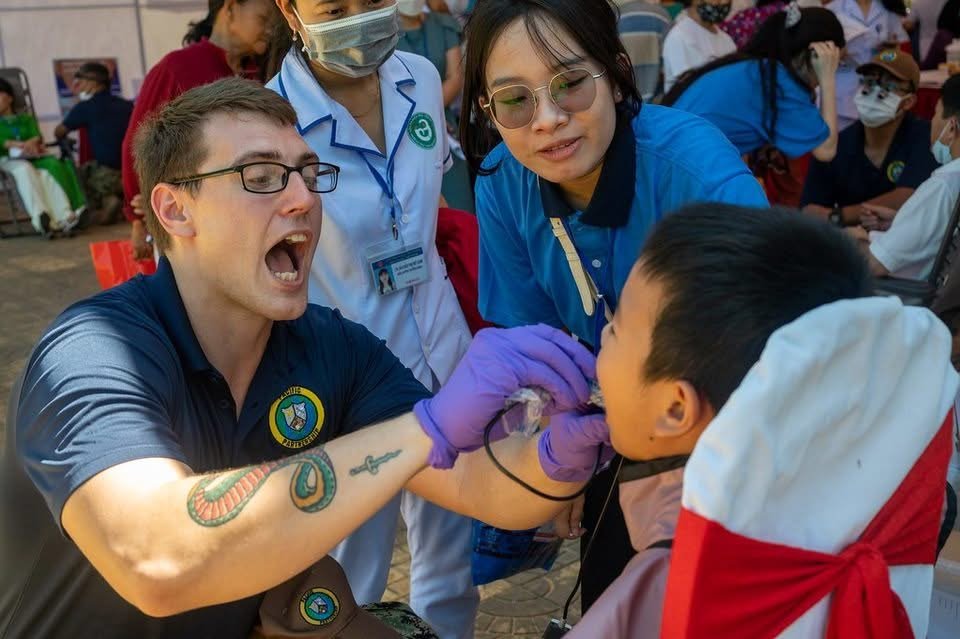
| Option | Typical cost to you | Who it suits | Main catch |
|---|---|---|---|
| Medicaid | Often $0 or a small copay | People who qualify by income | Adult dental varies by state |
| Free dental clinics | Free or very low | Uninsured, low income | Waitlists, limited hours |
| Free dental events (e.g., Mission of Mercy) | Free | Anyone who can attend | Only a few days a year, long lines |
| Community health centers | Sliding scale by income | Low to moderate income | Not every center has dental |
| Dental schools | Reduced fees | Anyone with time to wait | Longer visits, screening first |
| Private dentist (for comparison) | $150–$400 simple; more if surgical | Need it done fast | Highest cost without insurance |
Typical 2026 US estimates; they vary by region and insurance. A surgical extraction, such as a broken or impacted tooth, usually costs more than a simple one, and X-rays or an exam may be billed separately.
Where to find a free tooth extraction
Medicaid and CHIP
If your income is low, check whether you qualify for Medicaid. Children covered by Medicaid or CHIP have dental benefits, including medically necessary extractions. For adults, dental coverage depends on the state: some states offer broad benefits, some cover mainly emergency care such as relieving pain and infection, and a few offer very little. Contact your state Medicaid office or check your plan’s member materials, then ask which local dentists accept it. Not every dentist takes Medicaid, so calling ahead saves time.
Free and charitable dental clinics
Many communities have free clinics run by nonprofits, churches or volunteer dentists. Some offer dental care only on certain days, and many prioritize people who are uninsured and below a set income level. Extractions are one of the most common services they provide because they relieve pain quickly. Expect to bring proof of income and address, and be ready for a waitlist. Local United Way offices, health departments and hospital social workers often know which free clinics are running near you.
Free dental events
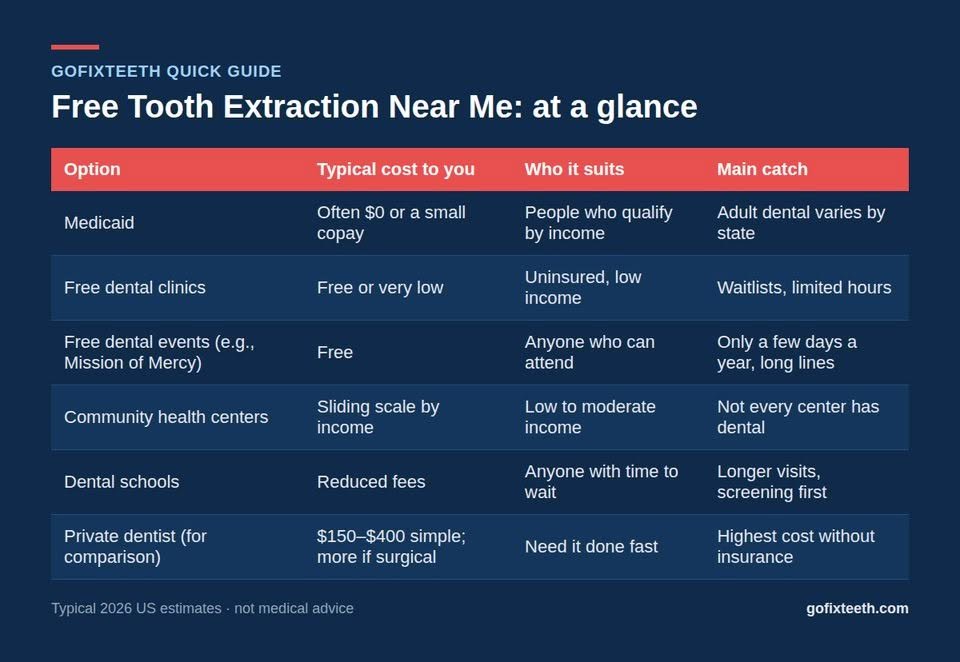
Large volunteer events, often called Mission of Mercy, as well as similar free pop-up clinics run by dental societies and charities, provide free care to anyone who shows up, usually over one or two days. Extractions and fillings make up much of the work. People sometimes line up the night before, and organizers may not be able to see everyone. Search for “Mission of Mercy” or “free dental day” with your state name, and check your state dental association’s website for upcoming dates.
Community health centers (sliding scale)
Federally funded community health centers serve patients regardless of insurance status or ability to pay, and they charge on a sliding fee scale based on income and household size. For some patients, the fee can be very low. Many, though not all, have dental clinics. You can search by address with the HRSA Find a Health Center tool and look for centers that list dental services.
Dental schools
Dental schools treat patients at reduced fees, with students working under licensed faculty. Some also run urgent care clinics that can handle a painful tooth faster. Visits take longer than at a private office, and you may need a screening appointment first. The National Institute of Dental and Craniofacial Research lists dental schools, community programs and other ways to find low-cost care.
Other low-cost places to check
- Veterans: some veterans are eligible for VA dental care. Eligibility rules are specific, so ask your VA facility.
- Dental hygiene and assisting schools: these do cleanings rather than extractions, but they can sometimes refer you to low-cost dentists.
- Local health departments: some run dental clinics or keep a list of reduced-fee providers.
The Dental Recovery & Savings Bundle includes 4 ready-to-use scripts to lower your dental bill, so you know exactly what to ask a private office about cash prices, discounts and payment plans. You also get a printable day-by-day recovery calendar for after your extraction. Instant PDF, $12, 30-day money-back promise.
Get the savings scripts →
How to find free tooth extraction near you, step by step
- Check Medicaid eligibility first. If you qualify, it may cover the extraction outright.
- Search community health centers with the HRSA locator and call the closest ones with dental services. Ask about the sliding fee scale and the next available urgent slot.
- Call the nearest dental school and ask about emergency or urgent clinic hours.
- Look up free clinics and upcoming free dental days in your area through your state dental association, local health department or United Way.
- Ask private offices for a cash price. Some offer a discount for paying in full or a payment plan, and the total may be close to a sliding-scale fee for some patients.
When you call, ask three questions: Do you do extractions? What is the total cost, including the exam and X-ray? How soon can I be seen? Writing down the answers makes it easier to compare.
Watch out for false promises
Be cautious with websites and ads that say “free extractions” but only connect you to a referral line or a discount plan. A dental discount plan is not insurance and is not free; it gives reduced prices at member offices for a yearly fee. Read what you are signing up for before giving payment details, and confirm prices with the dental office directly.
What to do if you’re in pain right now
If you cannot get an appointment today, some general steps may help in the short term: use over-the-counter pain relievers as the label directs if they are safe for you, keep the area clean, avoid chewing on that side and avoid very hot or cold foods. For more ideas, see extreme tooth pain, can’t sleep, and for fast options when a tooth must come out, see I need a tooth pulled immediately.
Hospital emergency rooms usually do not pull teeth, but they can treat dangerous infections, give pain relief and refer you to dental care. Go to the ER for the warning signs listed below.
Is pulling the tooth the right choice?
Extraction is often the least expensive treatment upfront, but it is not always the cheapest in the long run. A missing back tooth can let other teeth shift, and replacing it later with a bridge or implant costs more. If the tooth can be saved with a root canal and you can afford it, ask the dentist to explain both paths. Our guide to root canal or pull the tooth compares them. That said, if the choice is between leaving an infected tooth in place and having it removed for free, removing it is usually far safer than waiting.
See a dentist promptly if…
- You have a toothache that lasts more than a day or two, or throbs on its own
- Your gum is swollen or has a pimple-like bump near the tooth
- A tooth is broken, loose or keeps you from eating
- You have a bad taste in your mouth that will not go away
Seek emergency care right away, or call 911, for facial or neck swelling that is spreading, fever with tooth pain, trouble opening your mouth, or trouble swallowing or breathing. A dental infection can become serious, and you should not wait for a free appointment in these cases.
Frequently asked questions
Can I get a tooth pulled for free?
Sometimes. Medicaid, free clinics and free dental events may cover the full cost. Availability depends on where you live and whether you qualify.
Do community health centers pull teeth?
Many with dental clinics do. Fees are based on income, so the cost can be low. Use the HRSA locator to find one with dental services.
Will the ER pull my tooth?
Usually not. ERs can treat serious infections and pain and refer you to a dentist, but most do not perform extractions.
Are dental schools cheaper for extractions?
Generally yes. Fees are reduced, but visits take longer and you may need a screening first.
Does Medicaid cover tooth extraction for adults?
It depends on the state. Many states cover at least some adult dental care, but the details vary, so check with your state program.
Sources
- National Institute of Dental and Craniofacial Research. Finding Low-Cost Dental Care.
- Health Resources and Services Administration. Find a Health Center.
- Mayo Clinic. Tooth Abscess.
- MedlinePlus. Dental Health.
This article is for general education and does not replace advice from a dentist. Program availability, eligibility and fees change, so confirm details directly with each provider.