Pulling a Tooth With Infection: Is It Safe?
Can a dentist pull an infected tooth? When antibiotics may come first, why your dentist decides, the risks, and aftercare after an infected extraction.
✅ Quick answer
Yes, a dentist can often pull an infected tooth, and removing the source of the infection is frequently part of treating it. Whether you need antibiotics first, at the same time, or not at all depends on how far the infection has spread, your health and whether the area can be numbed well, so that decision belongs to your dentist or oral surgeon. Seek emergency care right away for spreading facial swelling, fever, or trouble swallowing or breathing.
Many people are told, or have read online, that a dentist will never pull a tooth while it is infected. Others are sent home with antibiotics and wonder why the tooth was not simply taken out that day. Both experiences are common, because the right approach depends on the situation in front of the dentist.
This guide explains how dentists generally think about pulling a tooth with infection, when antibiotics may be used, the risks to know about, and how to take care of yourself afterward. It is not a substitute for an exam: only a dentist who can see your tooth and X-rays can tell you what is right for you.
📩 Important: after you sign up, open the email from Go Fix Teeth and tap Confirm. Your PDF opens right away. Not there? Check Spam or Promotions.
Can a dentist pull an infected tooth?
In many cases, yes. A tooth abscess is a pocket of pus caused by bacteria, often after decay or a crack lets germs reach the nerve. Mayo Clinic notes that treatment aims to get rid of the infection, and options include draining the abscess, a root canal to save the tooth, or pulling the tooth if it cannot be saved. Taking the tooth out removes the place where bacteria are living and gives pus a way to drain.
The old idea that you must always “wait for the infection to clear” before an extraction is not a fixed rule. Dentists weigh several factors, and in some situations removing the tooth promptly is the faster way to control the infection. In others, they may want swelling to settle or antibiotics on board first.
Antibiotics first or extraction right away?
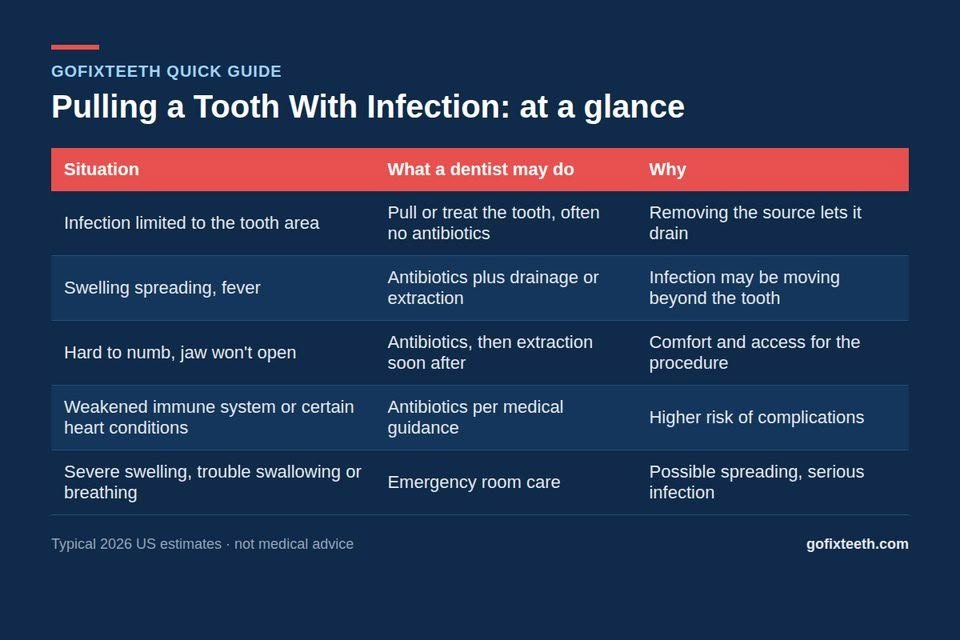
This is the question people ask most, and the honest answer is that your dentist decides based on what they find. Here are common scenarios and how they are often handled:
| Situation | What a dentist may do | Why |
|---|---|---|
| Infection limited to the tooth area | Pull or treat the tooth, often no antibiotics | Removing the source lets it drain |
| Swelling spreading, fever | Antibiotics plus drainage or extraction | Infection may be moving beyond the tooth |
| Hard to numb, jaw won’t open | Antibiotics, then extraction soon after | Comfort and access for the procedure |
| Weakened immune system or certain heart conditions | Antibiotics per medical guidance | Higher risk of complications |
| Severe swelling, trouble swallowing or breathing | Emergency room care | Possible spreading, serious infection |
These are general patterns, not a guide to treating yourself. Antibiotics alone do not fix the cause of a dental abscess: if the infected tooth stays, the infection often comes back once the medicine stops. That is why a dentist usually pairs antibiotics with a procedure, either a root canal or an extraction.
Why “it won’t numb” comes up
Infected tissue tends to be more acidic and inflamed, which can make local anesthetic work less well. Some dentists use extra numbing techniques, and some prefer to calm the infection for a few days first. If you are anxious about pain, tell your dentist, and ask what options they have for numbing and sedation.
Don’t use leftover or online antibiotics
Taking antibiotics you have at home, or buying them without a prescription, can delay real treatment and may not be the right drug or dose. If you are thinking about it, read our guide to over-the-counter options for a tooth infection to understand what they can and cannot do, and then see a dentist.
Risks of pulling an infected tooth
Extracting an infected tooth is a routine procedure for dentists and oral surgeons, but it carries some risks, as any extraction does:
- Dry socket. This happens when the blood clot in the socket is lost or does not form, leaving bone exposed. Cleveland Clinic notes it often causes increasing pain a few days after the extraction, sometimes spreading toward the ear, along with a bad taste or smell. Smoking and sucking through a straw raise the risk.
- Lingering infection. Some swelling and soreness for a few days is common, but swelling that keeps growing or comes back needs a recheck.
- Bleeding. Oozing for the first day is normal. Heavy bleeding that does not slow with firm pressure is not.
- Nerve or sinus issues. With some lower back teeth, nearby nerves can be irritated, and upper back teeth sit close to the sinus. Your dentist reviews your X-rays to plan around these.
- Spread of infection. Rarely, an infection can spread to deeper spaces in the face or neck. This is a medical emergency and the reason warning signs should never be ignored.
Waiting too long carries its own risks. An untreated tooth abscess does not go away on its own and can spread. If you need a tooth out quickly, see I need a tooth pulled immediately for how to find same-day care.
Pull it or save it?
An extraction is not the only way to treat an infected tooth. A root canal removes the infected pulp and keeps the tooth. Your dentist will consider how much healthy tooth is left, the state of the bone and gums, cost and your preference. For a fuller comparison, read root canal or pull the tooth.
Useful on Amazon for this job
As an Amazon Associate we earn from qualifying purchases. Always confirm fit for your exact vehicle or ask your dentist.
The Dental Recovery & Savings Bundle includes a printable day-by-day recovery calendar so you can track pain, swelling and what to eat each day after the extraction. You also get 4 ready-to-use scripts to lower your dental bill before you agree to the price. Instant PDF, $12, 30-day money-back promise.
Get the recovery calendar →
What to expect during the extraction
Your dentist will examine the area, take an X-ray, review your medical history and medicines, and explain the plan. The area is numbed, and for a simple extraction the tooth is loosened and removed. Teeth that are broken, curved or impacted may need a surgical extraction, where a small cut is made in the gum or the tooth is removed in pieces. Pus may drain during the procedure, which often brings relief. Gauze is placed to help a clot form, and you get written aftercare instructions.
Aftercare after pulling an infected tooth
Always follow the instructions your dentist gives you. Typical guidance after an extraction includes:
- Bite on gauze as directed to control bleeding, usually for the first 30 to 60 minutes, replacing it if needed.
- Protect the clot. For the first day, avoid rinsing, spitting forcefully, using straws and smoking or vaping.
- Rinse gently after the first day with warm salt water if your dentist recommends it, letting the water fall out of your mouth rather than spitting.
- Finish any antibiotics exactly as prescribed, even if you feel better, unless your dentist or doctor tells you otherwise.
- Manage pain with the medicine your dentist suggests. A cold pack on the cheek in short sessions can help with swelling during the first day.
- Eat soft, cool foods at first and chew on the other side.
- Keep the rest of your mouth clean, brushing gently and avoiding the socket at first.
If you rinsed by mistake or worry the clot came out, see tooth extraction blood clot fell out for what to watch for.
See a dentist promptly if…
- You have a throbbing toothache, a gum bump that drains, or a bad taste that will not go away
- Pain gets worse two to four days after an extraction instead of better
- Swelling increases after the first two or three days, or returns
- Bleeding keeps going despite firm pressure on gauze
- You are on antibiotics and not improving
Seek emergency care right away, or call 911, for swelling spreading to the eye, jaw or neck, fever with tooth pain, trouble opening your mouth, or trouble swallowing or breathing.
Frequently asked questions
Will a dentist pull a tooth with an abscess?
Often, yes. Many dentists remove an abscessed tooth the same day if it cannot be saved and the area can be numbed. Some prefer antibiotics first, depending on the infection and your health.
Do I need antibiotics before a tooth extraction?
Not always. Antibiotics are usually reserved for infections that are spreading, cause fever, or affect people at higher risk. Your dentist decides.
Is it dangerous to pull an infected tooth?
It is a common procedure and often helps clear the infection. Like any extraction it has risks, such as dry socket or bleeding, which your dentist can explain.
How long after pulling an infected tooth will I feel better?
Many people feel noticeable relief within a few days as drainage and healing begin. Soreness that gets worse instead of better should be checked.
Can I wait until the infection goes away on its own?
No. A tooth abscess does not resolve on its own, and waiting can let it spread. See a dentist as soon as you can.
Sources
- Mayo Clinic. Tooth Abscess.
- Cleveland Clinic. Dry Socket.
- Cleveland Clinic. Root Canal.
- MedlinePlus. Tooth Disorders.
This article is for general education and does not replace advice from your dentist or doctor, who can examine you and decide whether antibiotics or an extraction is right for you.