Same Day Tooth Extraction and Implant: Is It Right for You?
Same day tooth extraction and implant explained: who is a candidate, healing timeline, risks, and typical 2026 US cost vs a delayed implant.
✅ Quick answer
Yes, a tooth can often be removed and an implant placed in the same visit, a procedure called immediate implant placement. It works best when you have enough healthy bone, healthy gums and no active infection at the site. You may leave with a temporary tooth, but the implant still needs about 3 to 6 months to fuse with the bone before the final crown, and a typical single implant with crown costs about $3,000 to $5,500 in the US (2026 estimate).
Losing a tooth and then waiting months with a gap is something most people would rather avoid. That is why “same day tooth extraction and implant” is such a common search. Same-day placement can mean fewer surgeries, less total treatment time and, in the right situation, a tooth-shaped temporary on the day of surgery.
But it is not right for every tooth or every patient. Below is how the procedure works, who tends to be a good candidate, how it compares with waiting, the healing timeline, risks and what it typically costs.
📩 Important: after you sign up, open the email from Go Fix Teeth and tap Confirm. Your PDF opens right away. Not there? Check Spam or Promotions.
What is a same-day extraction and implant?
In a traditional, delayed approach, the dentist or oral surgeon removes the tooth, lets the socket heal for roughly 2 to 4 months (sometimes with a bone graft), places the implant, then waits another few months before the final crown. With immediate implant placement, the implant post is set into the fresh socket right after the tooth comes out.
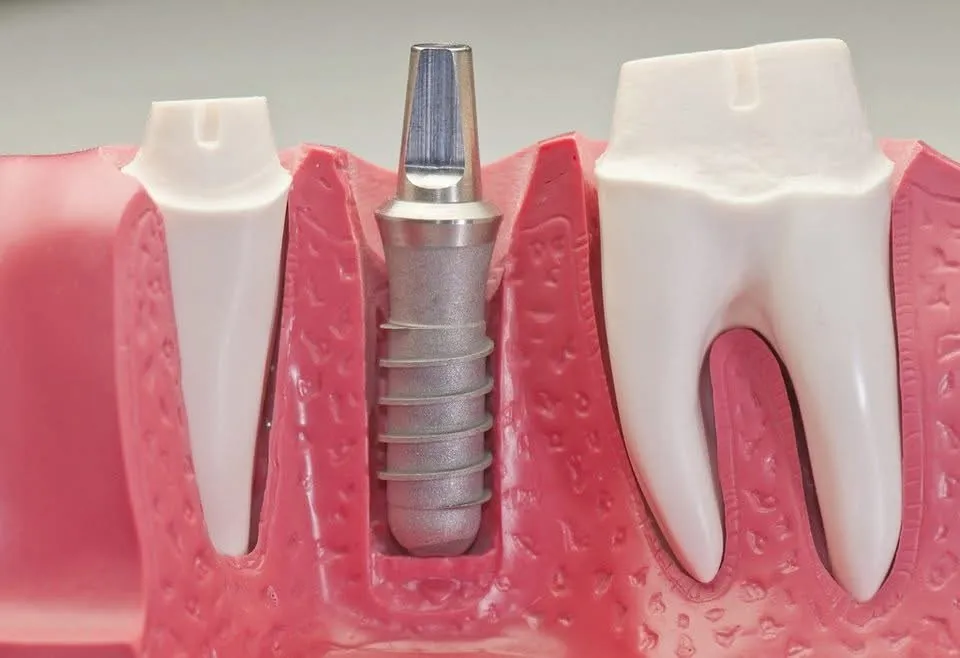
The term “same day” can describe two different things, so ask which one your dentist means:
- Immediate implant placement: the implant goes in the day of the extraction, but you may get a removable temporary or no tooth on it while it heals.
- Immediate loading (“teeth in a day”): the implant is placed and a temporary crown is attached the same day. The temporary is usually kept out of heavy biting contact while the bone heals.
Either way, the final, permanent crown is usually placed months later, once the implant is stable.
Same-day vs delayed implant: comparison
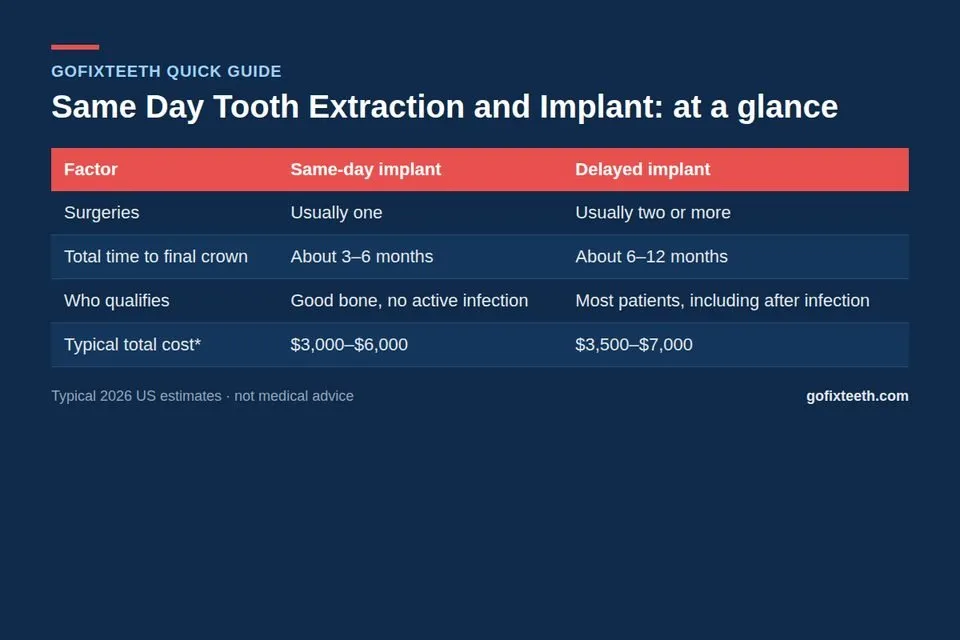
| Factor | Same-day implant | Delayed implant |
|---|---|---|
| Surgeries | Usually one | Usually two or more |
| Total time to final crown | About 3–6 months | About 6–12 months |
| Who qualifies | Good bone, no active infection | Most patients, including after infection |
| Typical total cost* | $3,000–$6,000 | $3,500–$7,000 |
*Typical 2026 US estimates for one tooth including extraction, implant, abutment and crown; they vary by region, provider and insurance. Bone grafts, 3D scans and sedation can add to either path.
Who is a good candidate?
Your dentist or oral surgeon will usually take a 3D cone beam CT scan to check the bone before deciding. Things that often make you a good candidate include:
- Enough healthy bone around and beyond the socket to hold the implant firmly on day one
- No active infection, such as an abscess, pus or swelling at the tooth being removed
- Healthy, thick gums and no untreated gum disease
- A tooth that can be removed cleanly without breaking the thin bone wall around it
- Good general health, with conditions like diabetes well controlled
- Not smoking, or willingness to stop around the surgery
Things that may lead your dentist to recommend waiting instead:
- An active infection or large abscess at the site
- Significant bone loss, or a thin or broken bone wall
- Heavy grinding or clenching that could stress a new implant
- Certain medicines that affect bone, such as some osteoporosis or cancer drugs, or past radiation to the jaw
- Uncontrolled diabetes or other health problems that slow healing
Being turned down for same-day placement does not mean you cannot have an implant. It often just means the socket needs time, and sometimes a bone graft, before the implant goes in.
What happens on surgery day
- Numbing and sedation. Local anesthetic is standard; some offices offer oral or IV sedation.
- Gentle extraction. The tooth is removed carefully to protect the surrounding bone.
- Cleaning the socket. Any soft tissue or debris is removed.
- Placing the implant. The implant post is fitted into the socket and into the bone beyond it. Small gaps may be filled with bone graft material.
- Temporary tooth or healing cap. If the implant is stable enough, a temporary crown may be attached. If not, a healing cap or a removable temporary is used.
The visit often takes 1 to 3 hours for a single tooth. For people losing many or all teeth at once, see our guide to full mouth extraction with immediate dentures, which is a different approach.
Healing timeline
- Days 1–3: Swelling, mild bleeding and soreness are normal and usually peak around day 2 or 3. Use ice packs, rest and the pain relief your surgeon recommends.
- Week 1: Soft foods only and no chewing on the implant side. Stitches, if not self-dissolving, are often removed around 7 to 14 days.
- Weeks 2–8: The gums heal over and soreness fades. You still avoid biting hard on the temporary tooth.
- Months 3–6: The implant fuses with the jawbone (osseointegration). Your dentist checks stability, then takes impressions or scans for the final crown.
The socket itself heals much like a normal extraction. Our day-by-day tooth extraction healing stages show what is typical in the first two weeks.
Risks and success considerations
Dental implants have a strong track record overall, and immediate placement can do well in carefully selected patients. Success depends heavily on picking the right cases and on aftercare. Possible problems include:
- Implant not fusing with the bone, especially if it is loaded too early or the bone was weak
- Infection at the site
- Gum recession, which can show a gray edge or change the look of a front tooth over time
- Bone loss around the implant
- Nerve irritation in the lower jaw, causing numbness or tingling, or sinus involvement for upper back teeth
Smoking, uncontrolled diabetes, poor oral hygiene and grinding raise the risk of complications with any implant. Following your surgeon’s diet rules and keeping the area clean matter more than most people expect.
Call your oral surgeon if you have bleeding that does not slow after 30 to 60 minutes of firm gauze pressure, pain or swelling that gets worse after day 3, pus, a bad taste that does not go away, fever over 100.4°F (38°C), numbness that lasts after the anesthetic should have worn off, or the temporary tooth or implant feels loose. Seek emergency care for trouble breathing or swallowing, or swelling spreading to the eye or neck.
The Dental Recovery & Savings Bundle gives you 4 ready-to-use scripts to ask for a cash price, compare itemized estimates, check your insurance and set up a payment plan, plus a printable day-by-day calendar for after extraction (what’s normal, what to eat, when to call). Instant PDF, $12, 30-day money-back promise.
Get the savings bundle →
Cost: what you are paying for
An implant quote often bundles several parts. Typical 2026 US estimates, which vary by region and insurance:
- Extraction: about $150–$650, more for a surgical extraction
- Implant post: about $1,500–$2,500
- Abutment and crown: about $1,500–$3,000
- Bone graft (if needed): about $300–$1,200
- 3D scan: about $200–$500
- Sedation (optional): about $250–$800
Same-day placement can save some money because you avoid a separate surgery and a separate healing period, but the main parts cost about the same either way. Dental insurance may pay for the extraction and part of the crown, and some plans now cover a portion of implants. Ask for an itemized written estimate, and compare it with alternatives like a bridge.
Aftercare tips
- Bite on gauze as directed and keep your head raised the first night
- Stick to soft, cool foods at first and chew on the other side
- Do not smoke, vape or use a straw in the first days
- Rinse gently with salt water after the first 24 hours if your surgeon agrees
- Brush the other teeth normally and clean near the implant exactly as instructed
- Do not bite into hard food with the temporary tooth until you are cleared
Frequently asked questions
Can you get an implant the same day as a tooth extraction?
Often, yes, if you have enough healthy bone and no active infection at the site. Your dentist will decide after an exam and usually a 3D scan.
Do I leave with a tooth the same day?
Sometimes. If the implant is very stable, a temporary crown may be attached. Otherwise you may get a removable temporary or a healing cap while the implant heals.
Is a same-day implant more painful?
Most people describe discomfort similar to a regular extraction, managed with over-the-counter or prescribed pain relievers for a few days. Your experience can vary.
Can I get a same-day implant if my tooth is infected?
Active infection usually makes dentists choose a delayed implant. In some selected cases, the area is cleaned and treated first. Your surgeon will advise you.
How long does a same-day implant last?
With good care and regular checkups, implants are designed to last many years. The crown on top may need replacing over time from normal wear.
Sources
- Mayo Clinic. Dental implant surgery.
- Cleveland Clinic. Dental Implants.
- American Dental Association, MouthHealthy. Dental Implants.
- AAOMS. Dental Implant Surgery.
This article is for general education and does not replace advice from your dentist or oral surgeon, who can assess your bone, gums and health history.