Chipped Tooth Crown: Repair, Replace, Cost & What to Do
Chipped tooth crown? Learn if porcelain, PFM or zirconia chips can be repaired with bonding or need a new crown, 2026 US costs and what to do today.
✅ Quick answer
A small chip in a crown can often be smoothed or repaired with tooth-colored composite bonding in one short visit, while a large chip, a crack, or exposed tooth or metal usually means the crown needs replacing. A chipped crown is rarely a true emergency, but call your dentist within a few days, save any pieces, avoid chewing on that side, and get seen the same day if you have severe pain, swelling, or the crown is loose.
Crowns are strong, but they are not indestructible. Biting into an olive pit, a popcorn kernel, or a fork, grinding your teeth at night, or a fall can knock a piece off the porcelain. The surface may suddenly feel sharp against your tongue, or you may notice a dark line or gray edge that was not there before.
The good news is that a chipped tooth crown does not always mean starting over. What your dentist recommends depends on the size and location of the chip, what the crown is made of, and whether the tooth underneath is still sealed and healthy. Below is how chips differ by crown type, when bonding works, what each option typically costs, and what to do right now.
📩 Important: after you sign up, open the email from Go Fix Teeth and tap Confirm. Your PDF opens right away. Not there? Check Spam or Promotions.
Why crowns chip
- Biting hard objects. Ice, hard candy, nuts, bones, pits and using teeth to open packages are common causes.
- Grinding and clenching (bruxism). Night grinding puts heavy, repeated force on crowns and wears or fractures porcelain over time.
- Trauma. A fall, sports injury or blow to the face can chip or crack any crown.
- Age and wear. Older crowns, especially porcelain layered over metal, can weaken and chip after many years of use.
- Bite problems. If a crown takes too much force because of how your teeth meet, it is more likely to chip.
- Thin material. When there is little room for the crown, the porcelain may be thinner and more fragile in spots.
Sometimes no single cause is obvious. If your crown seems to have chipped on its own, our guide on a tooth that chipped off for no reason explains hidden factors like grinding and old cracks.
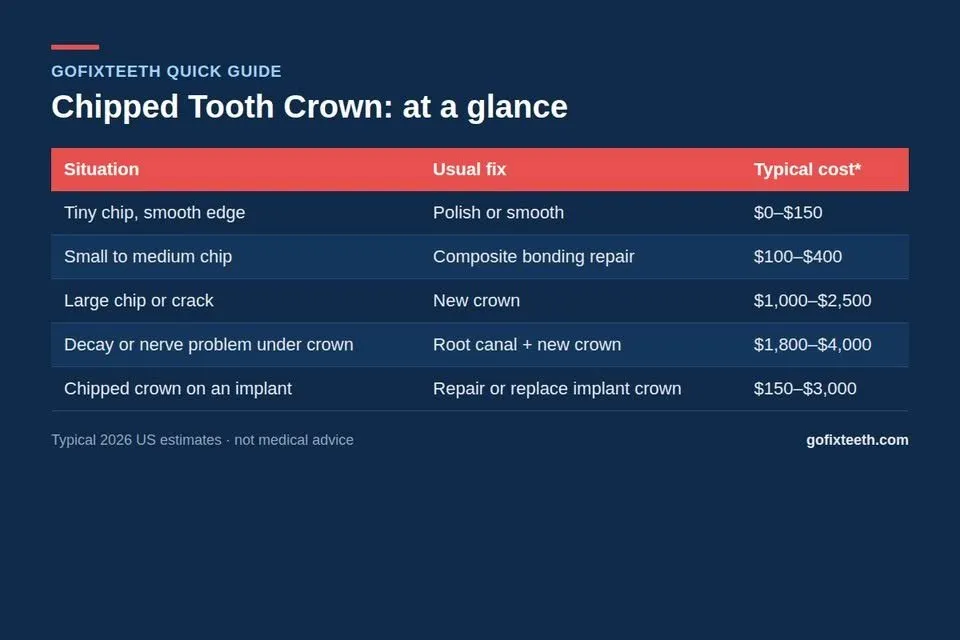
Repair or replace? Options at a glance
| Situation | Usual fix | Typical cost* |
|---|---|---|
| Tiny chip, smooth edge | Polish or smooth | $0–$150 |
| Small to medium chip | Composite bonding repair | $100–$400 |
| Large chip or crack | New crown | $1,000–$2,500 |
| Decay or nerve problem under crown | Root canal + new crown | $1,800–$4,000 |
| Chipped crown on an implant | Repair or replace implant crown | $150–$3,000 |
*Typical 2026 US estimates, vary by region and insurance. Many dental plans cover part of a replacement crown, often around 50% after the deductible, and many plans only replace a crown once every 5 to 10 years.
Porcelain, PFM and zirconia crowns: how chips differ
All-porcelain or ceramic crowns
These look the most natural, which is why they are popular for front teeth. Chips usually happen at the biting edge or corners. Small chips can often be bonded with composite resin that is color-matched to the crown. Larger chips tend to keep spreading, so replacement is often the better long-term choice.
Porcelain-fused-to-metal (PFM) crowns
PFM crowns have a metal base with porcelain layered on top. When the porcelain chips, you may see a gray or dark metal area underneath. If the metal is still intact and the crown seals well, the dentist may cover it with an opaque layer and composite. If a lot of porcelain is gone, or chips keep happening, a new crown is usually recommended.
Zirconia crowns
Solid zirconia is very strong and chips less often. Layered zirconia, which has porcelain on top for better looks, can still chip in the outer layer. Bonding to zirconia is possible but can be less predictable than bonding to natural tooth, so your dentist will weigh how big and where the chip is.
Not sure what your crown is made of? Your dental office has it in your records. If you are comparing crown types for a replacement, see our breakdown of tooth crown cost by material.
What to do today if your crown chipped
- Look and feel carefully. Is it a small flake, a large piece, or is the whole crown loose? Is any metal or darker tooth visible?
- Save any pieces in a clean container. They usually cannot be glued back, but they help the dentist see what happened.
- Rinse gently with warm water to clear any fragments.
- Protect your tongue and cheek. If the edge is sharp, cover it with a small piece of orthodontic wax or sugar-free gum until your visit.
- Chew on the other side and avoid hard, sticky, very hot or very cold foods.
- Manage soreness with an over-the-counter pain reliever if you can take one safely, following the label.
- Call your dentist and describe the chip. Many offices will see you within a few days, sooner if you have pain.
Avoid using superglue or household adhesives on a crown or tooth. They are not safe for the mouth and can make a proper repair harder. If the whole crown came off instead of just chipping, read my crown fell out but it doesn’t hurt and our guide to temporary glue for a tooth crown.
Is a chipped crown an emergency?
Usually not. A small chip with no pain can wait a few days for a regular appointment. But the crown still protects the tooth under it, so do not put the visit off for months. A chip can let bacteria and food reach the edge of the crown, which may lead to decay underneath.
Call your dentist the same day if:
- You have significant pain, sensitivity to hot or cold that lingers, or pain when biting
- A large part of the crown broke off or you can see the tooth underneath
- The crown feels loose or moves
- The sharp edge is cutting your tongue or cheek
Seek urgent or emergency care if you have facial swelling, fever, swelling spreading toward your eye or neck, trouble swallowing or breathing, or the chip happened with a hard blow to the face or head. Those signs can point to an infection or injury that needs prompt attention.
How bonding repair works
If the chip is small and the crown is otherwise sound, an intraoral repair is often done in a single visit, usually without numbing:
- The dentist roughens the chipped area slightly so the repair can grip
- A special conditioner or primer is applied to the porcelain, zirconia or exposed metal
- Tooth-colored composite is shaped over the chip and hardened with a curing light
- The repair is polished and your bite is checked
A bonded repair is a cost-saving option, but it is usually not as strong or long-lasting as a new crown. Composite can stain and chip again, especially on back teeth that take heavy chewing forces. Think of it as a good fix for small, cosmetic or low-stress chips, and a way to buy time, rather than a permanent solution for large damage.
When a new crown is the better choice
- The chip is large or runs down toward the gum
- There is a crack through the crown, not just a surface chip
- The crown no longer seals well, or there is decay at the edge
- The crown is old and has chipped before
- You are bothered by the look of a front crown and bonding would not match well
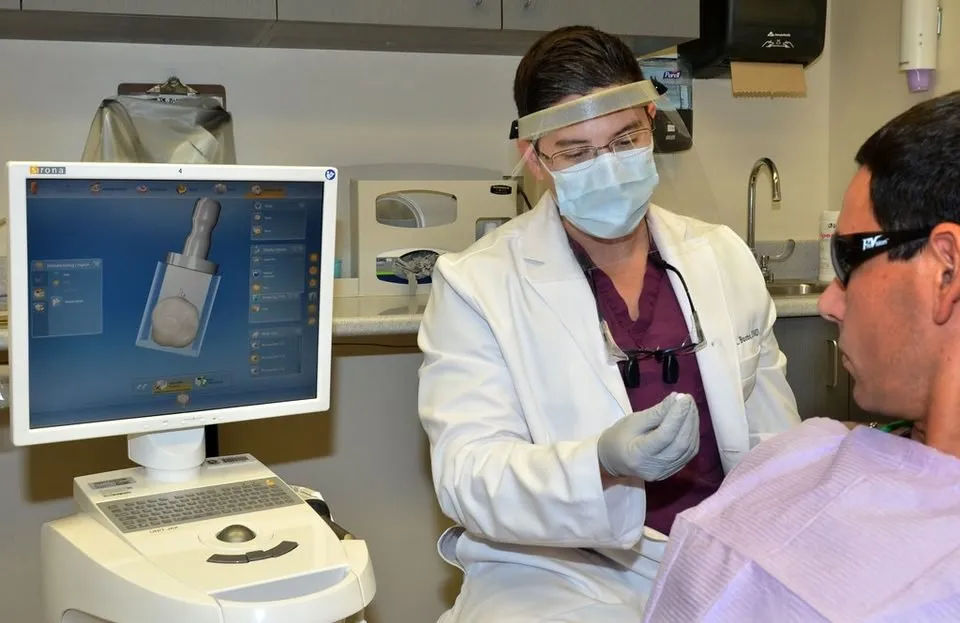
Replacing a crown usually takes two visits, or one visit if your dentist makes crowns in the office with a milling machine. The old crown is removed, the tooth is checked for decay, and a new crown is fitted. If the nerve is damaged, a root canal may be needed first. Mild soreness for a few days after a new temporary or permanent crown is common, but pain that keeps getting worse should be checked.
The Dental Recovery & Savings Bundle includes 4 word-for-word scripts to ask for a cash discount, check what your insurance will actually pay, request an itemized estimate and set up a payment plan, plus a printable recovery calendar for after your visit. Instant PDF, $12, 30-day money-back promise.
Get the savings bundle →
Questions to ask your dentist
- Is this chip small enough to repair, and how long might the repair last?
- Is the tooth under the crown still sealed and free of decay?
- If I replace the crown, which material fits my bite and budget?
- Will my insurance cover a replacement, and when was this crown last paid for?
- Do I grind my teeth, and would a night guard protect the new crown?
How to prevent future chips
- Wear a night guard if you grind or clench. A custom guard from your dentist fits best.
- Do not chew ice, hard candy, pens or fingernails, and do not use your teeth as tools.
- Wear a mouthguard for contact sports.
- Keep up regular checkups and cleanings so your dentist can spot wear, cracks or loose crowns early.
- Brush and floss around the crown every day; the edge where crown meets tooth is where decay starts.
Frequently asked questions
Can a chipped porcelain crown be fixed without replacing it?
Often, yes, if the chip is small and the crown still fits well. A dentist can smooth it or repair it with composite bonding. Large chips or cracks usually need a new crown.
How long can I wait to fix a chipped crown?
If there is no pain and the chip is small, a few days to a couple of weeks is usually fine. Do not wait months, because a damaged crown can let decay start underneath.
Does insurance cover a chipped crown?
Many plans cover part of a repair or replacement, but often only once every 5 to 10 years per tooth. Ask your dentist’s office to check your benefits before treatment.
Why can I see black or gray where my crown chipped?
On a porcelain-fused-to-metal crown, the dark area is often the metal underneath. It can also be darker tooth structure or decay, so have your dentist look at it.
Can I glue a chipped piece of crown back on?
No. Chipped porcelain fragments generally cannot be reattached at home, and household glues are not safe in the mouth. Keep the piece and see your dentist.
Sources
- Cleveland Clinic. Dental Crowns.
- American Dental Association, MouthHealthy. Crowns.
- NHS. Broken or knocked-out tooth.
- MedlinePlus. Tooth Disorders.
This article is for general education and does not replace advice from your dentist, who can examine your crown and the tooth underneath.