Front Tooth Filling: Look, Lifespan and Cost (2026)
Front tooth filling guide: how tooth-colored composite looks, how long it lasts, 2026 US costs, and when a veneer or crown is a better choice.
✅ Quick answer
A front tooth filling is almost always done with tooth-colored composite resin, which the dentist matches to your shade so it blends in with the rest of the tooth. It typically costs about $150–$450 per tooth without insurance, and a well-placed front filling often lasts around 5 to 10 years before it needs touching up or replacing. Larger repairs may be better served by a veneer or crown. Typical 2026 US estimates; they vary by region and insurance.
A cavity or chip on a front tooth feels different from one on a back molar. People will see it every time you smile, so the first questions are usually “Will it look obvious?” and “Will it last?” The good news is that modern tooth-colored fillings can look very natural when the dentist takes care with shade and shape.
This guide covers how a front tooth filling is done, what it looks like, how long it tends to last, what it costs in 2026, how it compares with a veneer or crown, and how to care for it so it stays looking good.
📩 Important: after you sign up, open the email from Go Fix Teeth and tap Confirm. Your PDF opens right away. Not there? Check Spam or Promotions.
Front tooth filling options and costs (2026)
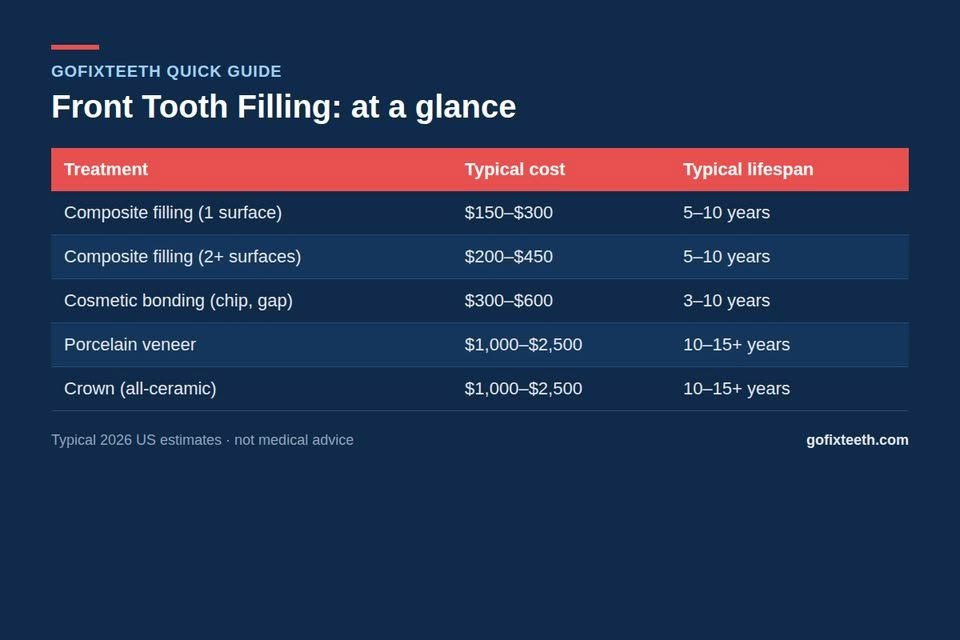
Here is how the most common ways to repair a front tooth compare, per tooth, without insurance:
| Treatment | Typical cost | Typical lifespan |
|---|---|---|
| Composite filling (1 surface) | $150–$300 | 5–10 years |
| Composite filling (2+ surfaces) | $200–$450 | 5–10 years |
| Cosmetic bonding (chip, gap) | $300–$600 | 3–10 years |
| Porcelain veneer | $1,000–$2,500 | 10–15+ years |
| Crown (all-ceramic) | $1,000–$2,500 | 10–15+ years |
Typical 2026 US estimates; they vary by region and insurance. Lifespans depend heavily on your bite, habits and home care. Insurance often covers a front composite filling as a basic service, commonly at about 70% to 80% after the deductible, while purely cosmetic bonding and veneers are usually not covered.
How a front tooth filling is done
Filling a front tooth with composite is usually a single visit and often takes 30 to 60 minutes per tooth. The general steps:
- Shade matching. Before the tooth dries out, the dentist compares it with a shade guide. Teeth look lighter when dry, so this is done early.
- Numbing. A local anesthetic is used when decay is being removed. Small cosmetic repairs on enamel sometimes don’t need it.
- Removing decay. The dentist cleans out the cavity or old filling and shapes the area. The Cleveland Clinic explains that cavities are permanent damage that need to be removed and filled to stop them from getting bigger.
- Bonding. The tooth is lightly etched and coated with a bonding agent so the composite sticks firmly.
- Layering. Composite is added in thin layers, each hardened with a blue curing light. Skilled dentists may use more than one shade to copy the natural translucency at the edge of the tooth.
- Shaping and polishing. The filling is sculpted, the bite is checked, and the surface is polished to a shine.
Mild sensitivity to cold for a few days is common. If pain lasts or gets worse, read how long a tooth should hurt after a filling.
What does a front tooth filling look like?
When it’s done well, most people can’t tell a composite filling is there, especially from a normal speaking distance. How natural it looks depends on a few things:
- Size and location. Small fillings between the front teeth are often invisible. A large repair across the biting edge is harder to blend.
- Shade match. Composite comes in many shades, and a careful dentist may layer two or more.
- Polish. A well-polished surface reflects light like enamel. A rougher surface can look dull and pick up stains.
- Whitening timing. Composite does not whiten. If you plan to whiten your teeth, do it before the filling so the shade is matched to your new color.
Over time, composite can pick up stain from coffee, tea, red wine and tobacco, and a thin line can appear at the edge. A quick polish or small touch-up at a cleaning often fixes this. If a front tooth has turned dark rather than just stained around a filling, see our guide on a black tooth, since that can point to a different problem.
Useful on Amazon for this job
As an Amazon Associate we earn from qualifying purchases. Always confirm fit for your exact vehicle or ask your dentist.
The Dental Recovery & Savings Bundle includes 4 ready-to-use scripts to lower your dental bill, so you know what to ask about cash discounts, insurance coding and payment plans before you book. You also get a printable day-by-day recovery calendar for bigger procedures. Instant PDF, $12, 30-day money-back promise.
Get the savings scripts →
How long does a front tooth filling last?
Many front composite fillings last around 5 to 10 years, and some last longer. They tend to wear out sooner when:
- The filling is large or covers the biting edge
- You grind or clench your teeth, especially at night
- You bite your nails, chew pens or open packages with your teeth
- You bite directly into hard foods like apples or crusty bread with your front teeth
- New decay forms around the edges
Signs a front filling needs attention include a rough or sharp edge, a dark line around it, a small chip, or food catching at the spot. If part or all of it comes out, don’t wait too long even if there’s no pain. Our guide my filling fell out but it doesn’t hurt explains why.
Front tooth filling vs veneer vs crown
A filling is the most conservative option because it removes the least tooth. But it isn’t always the best fit.
Choose a filling or bonding when…
The cavity or chip is small to moderate, most of the tooth is healthy, and you want a quick, lower-cost repair. Bonding can also close small gaps or reshape a slightly uneven tooth.
Consider a veneer when…
The problem is mostly cosmetic and covers the front of the tooth: several old, stained fillings, uneven color, or chips across more than one tooth. A porcelain veneer is a thin shell bonded to the front. The ADA’s MouthHealthy site notes that veneers can improve the color, shape and size of teeth. Veneers resist staining better than composite, but they cost much more and usually require removing a thin layer of enamel.
Consider a crown when…
The tooth is badly broken, has had a root canal, or has so much filling material that it’s weak. A crown covers the whole tooth and protects it from breaking. For a detailed comparison of the two bigger options, read tooth crown vs veneer.
How to care for a front tooth filling
- Brush twice a day with fluoride toothpaste and a soft brush. Very abrasive whitening pastes can dull composite over time.
- Floss daily, since many front fillings sit between teeth where new decay can start.
- Cut hard foods into pieces rather than biting straight in with your front teeth.
- Limit stain-causing drinks or rinse with water afterward.
- Wear a night guard if your dentist sees signs of grinding.
- Keep up with cleanings and exams so small edge problems are polished or patched early.
See a dentist promptly if…
- A front tooth has chipped, cracked or been knocked loose
- Your filling has come out or broken
- You notice a new dark spot, hole or rough area on a front tooth
- The tooth hurts to bite on or has lingering pain to hot or cold
If a tooth is knocked out completely, the NHS advises getting emergency dental care straight away. Seek emergency care right away for facial swelling, fever with tooth pain, or trouble swallowing or breathing.
Frequently asked questions
Can you fill a front tooth so it doesn’t show?
Yes, in most cases. Tooth-colored composite is shade-matched and polished, and small or medium fillings are often hard to spot.
Does a front tooth filling hurt?
The area is usually numbed, so you should feel pressure rather than pain. Mild sensitivity for a few days afterward is common.
Is bonding the same as a filling?
They use the same composite material. “Filling” usually means repairing decay, while “bonding” often refers to cosmetic changes like fixing chips or gaps.
Can a front tooth filling be whitened?
No. Composite keeps its color, so whiten first and have the filling matched afterward, or plan to replace old fillings after whitening.
Will insurance pay for a front tooth filling?
Usually, if it repairs decay or damage. Purely cosmetic bonding is often not covered.
Sources
- Cleveland Clinic. Cavities.
- Mayo Clinic. Cavities and Tooth Decay.
- American Dental Association, MouthHealthy. Veneers.
- American Dental Association, MouthHealthy. Crowns.
- NHS. Broken or Knocked-Out Tooth.
This article is for general education and does not replace advice from your dentist, who can examine your tooth and recommend the right repair for you.