Dental Flipper: Cost, Pros, Cons & Alternatives (2026)
What a dental flipper is, 2026 US cost, eating and speaking with one, how long it lasts, and how it compares with an Essix retainer and an implant.
✅ Quick answer
A dental flipper is a small, removable partial denture, usually a pink acrylic plate with one to a few false teeth, that fills a gap while you wait for an implant or bridge or when you need a low-cost fix. It typically costs about $300 to $1,000 without insurance in the US, and is meant to be a temporary option for months to a few years, not a long-term replacement. Typical 2026 US estimates; they vary by region and insurance.
Losing a front tooth, even for a few months, is something most people want to hide. A dental flipper is one of the quickest and cheapest ways to do that. It snaps in, looks like a tooth from a normal speaking distance, and comes out for cleaning.
But a flipper is not built to replace a tooth for the long haul. This guide explains what a flipper is, what it costs, what living with one is like, how long it lasts, and how it compares with an Essix retainer and a dental implant.
📩 Important: after you sign up, open the email from Go Fix Teeth and tap Confirm. Your PDF opens right away. Not there? Check Spam or Promotions.
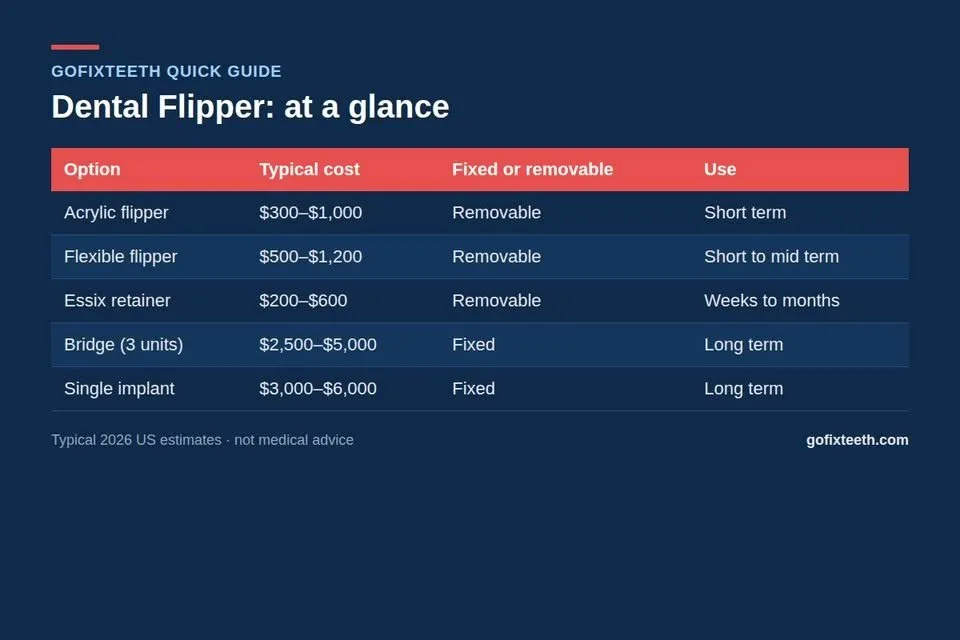
Dental flipper vs other gap fillers
| Option | Typical cost | Fixed or removable | Use |
|---|---|---|---|
| Acrylic flipper | $300–$1,000 | Removable | Short term |
| Flexible flipper | $500–$1,200 | Removable | Short to mid term |
| Essix retainer | $200–$600 | Removable | Weeks to months |
| Bridge (3 units) | $2,500–$5,000 | Fixed | Long term |
| Single implant | $3,000–$6,000 | Fixed | Long term |
Typical 2026 US estimates; they vary by region and insurance. Implant prices usually include the implant post, abutment and crown, but not extractions or bone grafts. Our guide on how to replace a missing tooth covers each option in more depth.
What is a dental flipper?
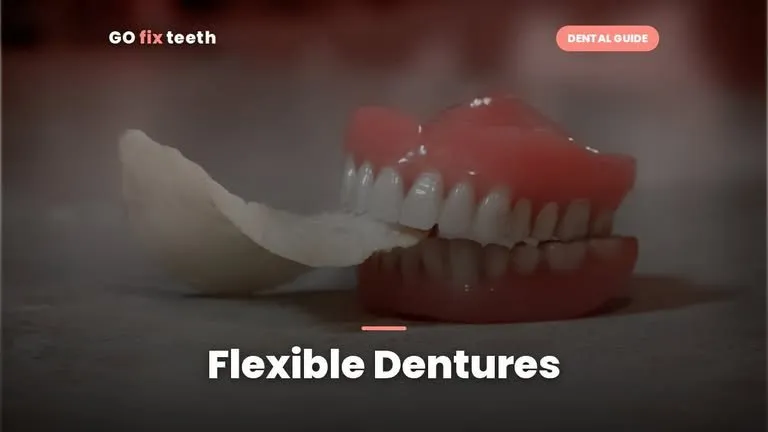
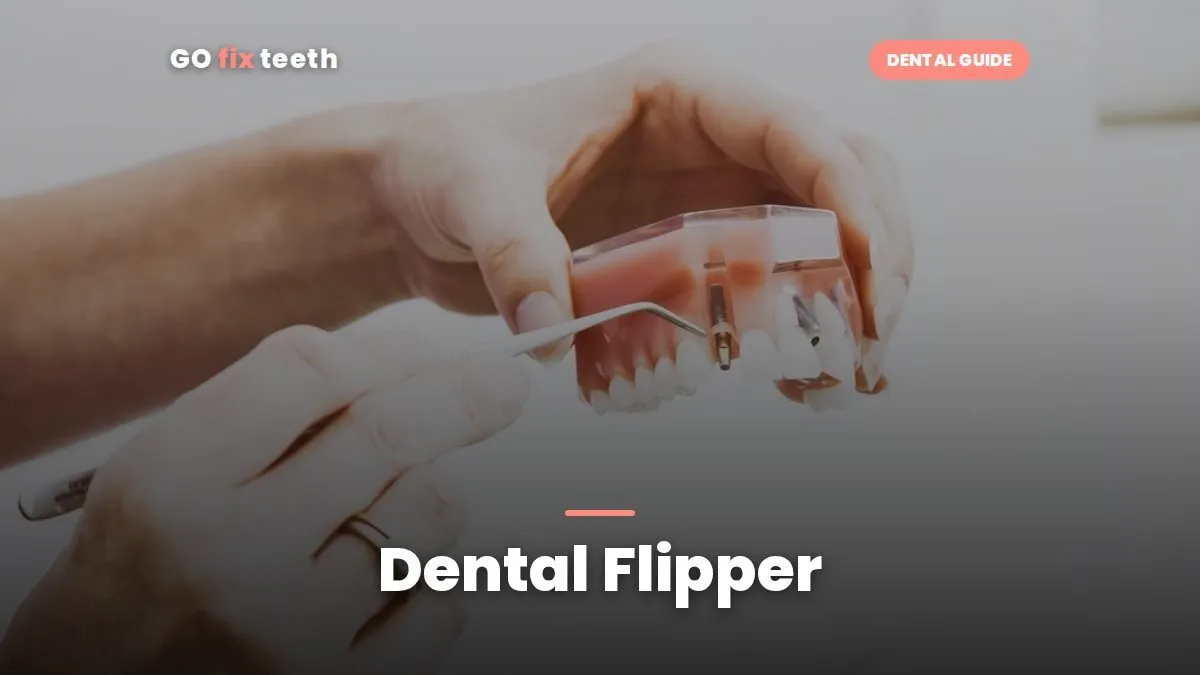
A flipper is a type of removable partial denture. The classic version has a pink acrylic base that rests against the roof of your mouth (for upper teeth) or behind your lower teeth, with one or more plastic teeth attached. It is held in place by the shape of the plate and sometimes small wire clasps. A flexible version uses a bendable nylon-type material with gum-colored clasps and no wires.
The name comes from how easy it is to “flip” in and out with your tongue. Dentists most often use flippers:
- Right after a front tooth is pulled, while the area heals before an implant
- During implant healing, which can take several months
- When a bridge or implant is not affordable yet
- For a young person whose jaw is still growing and isn’t ready for an implant
Acrylic vs flexible flipper
The classic acrylic flipper is the cheapest version. It is rigid, easy for a lab to adjust, and a tooth can often be added if another one is lost. The downsides are bulk, possible wire clasps that show, and a higher chance of cracking if it is dropped.
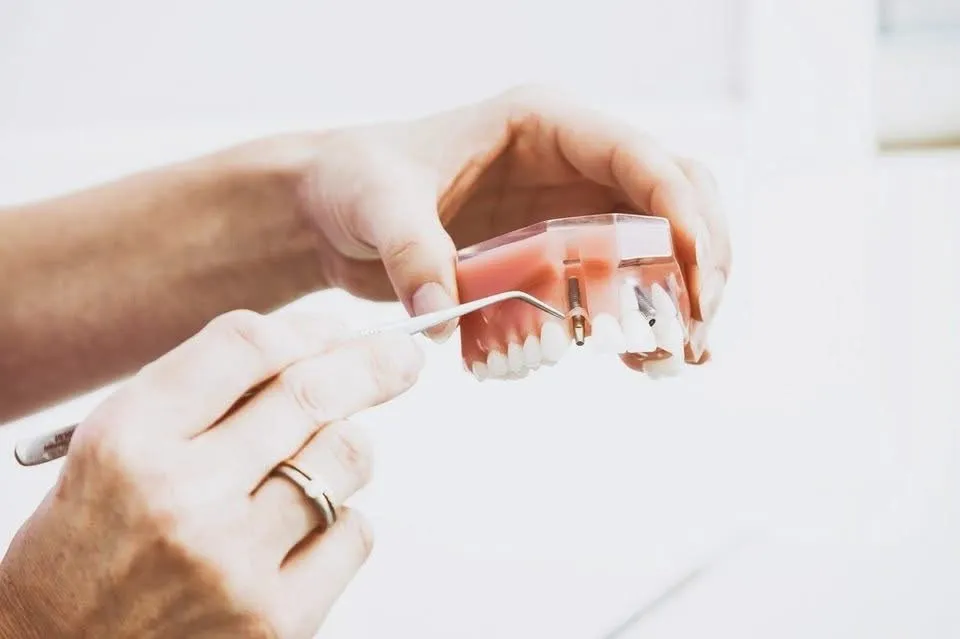
A flexible flipper uses a thin nylon-type material that bends slightly and grips the teeth with gum-colored clasps. It tends to feel lighter, looks more natural, and is less likely to snap. It usually costs more and is harder to reline or add to, which matters less when the flipper is only meant to last until an implant or bridge is ready. If you expect to wear it for a year or more, the comfort of a flexible design may be worth the extra cost. Your dentist can tell you which one fits your gap, your bite and the teeth around it.
How a flipper is made and fitted
Your dentist takes impressions or a digital scan of your mouth and picks a shade to match your teeth. A lab makes the flipper, which usually takes one to two weeks. If the tooth is being pulled, the flipper can often be made in advance and placed on extraction day, much like same day dentures. At the fitting, the dentist adjusts sore spots and the bite. Expect a short follow-up visit or two as the gums heal and change shape.
Eating and speaking with a flipper
Most people adjust in a week or two, but there is a learning curve.
- Speech: The plate covers part of the palate, so some sounds like “s” and “th” may feel odd at first. Reading aloud helps.
- Eating: Many dentists suggest taking a flipper out to eat, or at least avoiding biting into hard foods with it. It isn’t strong enough for heavy chewing, and the false tooth can snap off.
- Feel: More saliva and a bulky feeling are common in the first days.
- Sleeping: Most dentists advise taking it out at night to let the gums rest and to keep it clean.
Useful on Amazon for this job
As an Amazon Associate we earn from qualifying purchases. Always confirm fit for your exact vehicle or ask your dentist.
The Dental Recovery & Savings Bundle includes 4 ready-to-use scripts to lower your dental bill, so you know how to ask about cash prices and payment plans for the flipper now and the permanent tooth later. You also get a printable day-by-day recovery calendar for after an extraction. Instant PDF, $12, 30-day money-back promise.
Get the savings scripts →
How long does a dental flipper last?
A flipper can last anywhere from several months to a few years with good care. Acrylic can crack if dropped, and the plastic tooth can wear or break. Fit also changes as your gums heal after an extraction, so it may need adjusting or a reline.
Dentists generally don’t recommend a flipper as a permanent answer. Because it rests on the gums and can put pressure on the teeth next to the gap, long-term use may irritate the gums and doesn’t stop the bone under the gap from shrinking. If you’ve had a flipper for a long time, ask your dentist whether a more permanent option fits your budget.
Dental flipper vs Essix retainer
An Essix retainer is a clear plastic tray, like a thin aligner, with a tooth-colored filler in the gap. It covers all your teeth on that arch.
- Looks: An Essix can look natural up close, but the plastic covers your other teeth and can look shiny.
- Comfort: It doesn’t cover the palate, so speech is often easier. But you usually shouldn’t eat with it.
- Durability: Thin plastic can crack or wear within months.
- Implant healing: Some dentists prefer an Essix during implant healing because it doesn’t press on the gum over the implant site.
A flipper is usually sturdier and better for a longer wait. An Essix is often cheaper and fine for short gaps in time.
Dental flipper vs implant
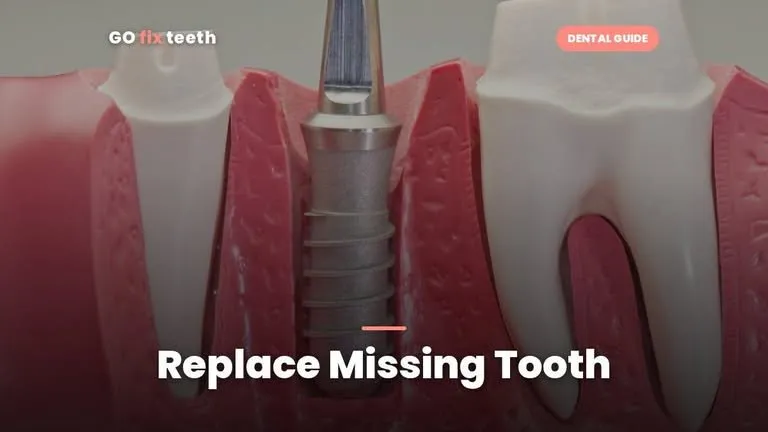
An implant is a titanium or ceramic post placed in the jawbone with a crown on top. It is fixed, you chew normally on it, and it helps preserve the bone. With good care, implants can last many years. The downsides are the cost, the surgery, and the months of healing before the final crown. A flipper is often what you wear while that healing happens. See same day tooth extraction and implant for a faster option some people qualify for.
Caring for your flipper
- Brush it daily with a soft brush and a non-abrasive denture cleaner, not regular toothpaste.
- Soak it in water or a denture solution when it’s out so it doesn’t dry and warp.
- Avoid hot water, which can distort the plastic.
- Clean over a folded towel or a sink of water in case you drop it.
- Keep brushing and flossing your natural teeth, especially the ones next to the gap.
See a dentist promptly if…
- The flipper causes a sore spot that doesn’t heal in a few days
- It cracks, the tooth breaks off, or a clasp bends
- It feels loose or rocks
- The teeth next to the gap become sore or loose
Seek emergency care right away, or call 911, for facial swelling that is spreading, fever, bleeding after an extraction that won’t stop with pressure, or trouble swallowing or breathing.
Frequently asked questions
How much is a dental flipper?
Typically about $300 to $1,000 for an acrylic flipper in the US in 2026, and more for a flexible one.
Can you eat with a flipper?
Soft foods, carefully. Many dentists suggest removing it for meals because it isn’t built for hard chewing.
Does insurance cover a dental flipper?
Some plans cover it as a temporary partial denture, often around 50%. Some limit coverage if an implant is planned.
Can I wear a flipper permanently?
It isn’t designed for long-term use. Ask your dentist about a bridge, implant or partial denture for a lasting fix.
Is a flipper noticeable?
From normal talking distance, a well-made flipper usually looks like a natural tooth. The pink plate is mostly hidden behind your teeth.
Sources
- Cleveland Clinic. Dental Implants.
- American Dental Association, MouthHealthy. Implants.
- MedlinePlus. Dental Health.
- National Institute of Dental and Craniofacial Research. Finding Low-Cost Dental Care.
This article is for general education and does not replace advice from your dentist, who can examine your mouth and recommend the right tooth replacement for you.