Natural Antibiotic for Tooth Infection: What Really Works
Is there a strongest natural antibiotic for tooth infection? What clove oil, salt water and garlic can and can’t do, and when to get urgent care.
✅ Quick answer
There is no natural antibiotic, herb or home remedy that can cure a tooth infection. Salt water rinses, clove oil and cold compresses may ease pain or swelling for a short time, but the infection stays inside the tooth or gum until a dentist treats the source with drainage, a root canal or an extraction, plus prescription antibiotics when needed. If you have facial swelling, fever, or trouble swallowing or breathing, go to the ER or call 911.
When a tooth starts throbbing late at night or you can’t get a dental appointment for days, it makes sense to look for something you can do at home. Searches for “the strongest natural antibiotic for tooth infection” usually turn up lists of garlic, clove oil, oregano oil, turmeric and tea tree oil, sometimes with promises that they “kill the infection.”
The honest picture is different. Some of these may soothe symptoms, and a few have antibacterial effects in a lab dish. But a tooth abscess is a pocket of pus sealed inside bone or gum tissue. Nothing you rinse with or rub on the outside can reach and clear it. This guide explains what home measures can safely do while you arrange care, what they cannot do, and the warning signs that mean you should not wait.
📩 Important: after you sign up, open the email from Go Fix Teeth and tap Confirm. Your PDF opens right away. Not there? Check Spam or Promotions.
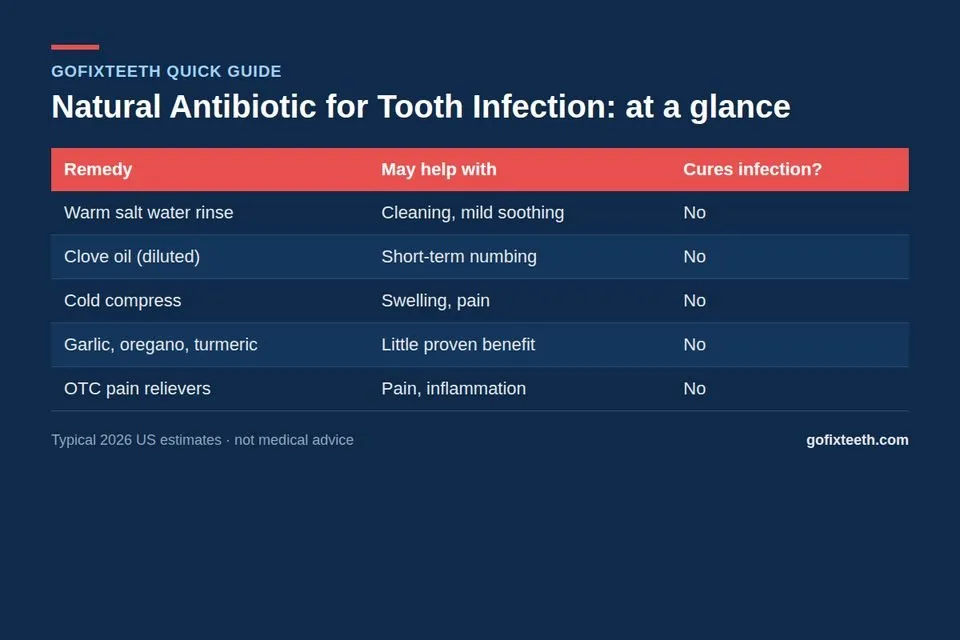
Home remedies for a tooth infection: what they can and can’t do

| Remedy | May help with | Cures infection? |
|---|---|---|
| Warm salt water rinse | Cleaning, mild soothing | No |
| Clove oil (diluted) | Short-term numbing | No |
| Cold compress | Swelling, pain | No |
| Garlic, oregano, turmeric | Little proven benefit | No |
| OTC pain relievers | Pain, inflammation | No |
Every row ends the same way. The goal of home care is to stay comfortable and avoid making things worse until you see a dentist, ideally within a day or two, sooner if symptoms are getting worse.
Why no natural remedy can cure a tooth abscess
A tooth infection usually starts when bacteria get into the nerve (pulp) of a tooth through deep decay, a crack or an old filling that leaks. The pulp dies, bacteria multiply inside the root, and pus collects at the tip of the root in the jawbone. A gum (periodontal) abscess forms in a deep pocket between the tooth and gum.
Either way, the source is protected: inside the tooth, inside bone or deep under the gum. Three things are needed to clear it:
- Remove the source. That means cleaning out the infected pulp with a root canal, or removing the tooth. See root canal or pull the tooth for how dentists decide.
- Drain the pus when there is a pocket of it, which often relieves pressure and pain quickly.
- Prescription antibiotics when the infection is spreading, you have fever or swelling, or your health puts you at higher risk. Antibiotics alone usually calm things down for a while, but the infection tends to come back if the tooth is not treated.
Lab studies showing that clove, garlic or oregano extracts kill bacteria in a dish do not mean they will clear an abscess in your jaw. The concentration, the location and the sealed pocket are completely different. And over-the-counter products are not a substitute either; our guide to over-the-counter antibiotics for tooth infection explains why true antibiotics require a prescription in the US.
Safe ways to ease symptoms while you get care
These steps may make the wait more bearable. They are not treatment.
Warm salt water rinse
Dissolve about half a teaspoon of salt in a cup of warm water, swish gently for 30 seconds and spit. Repeat a few times a day. It helps keep the area clean and may feel soothing. Do not swallow it, and don’t scrub a swollen area.
Clove oil, used carefully
Clove oil contains eugenol, which has a numbing effect and has long been used in dentistry. If you try it, dilute a drop or two in a carrier oil such as olive oil, put it on a cotton ball and hold it against the tooth briefly. Undiluted clove oil can irritate or burn the gums, and it is not recommended for young children. Numbing the pain does nothing to the infection under it.
Cold compress
Hold a cold pack wrapped in a cloth on the outside of your cheek for 15 to 20 minutes at a time. Avoid heat on the face, which can draw swelling outward.
Over-the-counter pain relievers
Ibuprofen or acetaminophen, taken as the label directs, are often used for dental pain. Check with a pharmacist or doctor if you have kidney, liver, stomach or heart problems, take blood thinners, are pregnant, or take other medicines. Never put aspirin or any pill directly on the gum; it can burn the tissue.
Other sensible steps
- Chew on the other side and avoid very hot, cold or sugary foods
- Keep brushing gently and keep the area clean
- Sleep with your head slightly raised
- Do not try to pop or cut a gum bump yourself
The Dental Recovery & Savings Bundle includes 4 ready-to-use scripts to lower your dental bill, so you know exactly what to say when you call about an urgent visit, a root canal or an extraction. You also get a printable day-by-day recovery calendar for after treatment. Instant PDF, $12, 30-day money-back promise.
Get the savings scripts →
Remedies to avoid
- Raw garlic held against the gum for long periods, which can cause chemical burns.
- Undiluted essential oils (clove, oregano, tea tree). Tea tree oil should never be swallowed.
- Hydrogen peroxide at full strength or swallowing it. If you use a peroxide rinse, it must be diluted and spit out, and it still won’t cure the infection.
- Leftover or someone else’s antibiotics. They may be the wrong drug or dose and can cause side effects or allergic reactions.
- Waiting it out because the pain stopped. Sudden relief can mean the nerve has died, not that the infection is gone.
What real treatment looks like
At the visit, the dentist will examine the tooth, take X-rays and decide on the right approach. That may include:
- Draining the abscess through a small cut in the gum or through the tooth
- A root canal to clean and seal the inside of the tooth, usually followed by a crown on back teeth
- An extraction if the tooth can’t be saved. It is often possible to remove an infected tooth right away; see pulling a tooth with an infection.
- A prescription antibiotic when the dentist decides it is needed
If you started antibiotics and swelling hasn’t improved after a few days, call back; our article on a tooth abscess still swollen after 3 days of antibiotics covers what that can mean. If cost is the barrier, community health centers and dental schools often offer lower fees; links are in the sources below.
Warning signs: go to the ER or call 911
Tooth infections can spread to the face, neck and, rarely, the blood or brain. Get emergency care right away if you have:
- Swelling in your face, jaw, under your tongue or in your neck, especially if it is spreading
- Fever, chills or feeling very unwell
- Trouble swallowing, breathing, or opening your mouth
- Swelling that pushes up toward your eye
- Confusion, severe headache, stiff neck or a racing heart
Call 911 if you have trouble breathing or swallowing. These are not situations for home remedies.
See a dentist promptly if…
- You have throbbing pain, pain when biting, or a bad taste in your mouth
- A pimple-like bump appears on the gum near a tooth
- A tooth is very sensitive to heat or lingers after cold
- Pain that kept you awake suddenly disappeared
Frequently asked questions
What is the strongest natural antibiotic for a tooth infection?
None of them is strong enough to cure one. Clove oil may help numb pain and salt water may help keep the area clean, but a dentist has to treat the source.
Can a tooth infection go away on its own?
The pain may fade, but the infection usually remains and can flare up or spread. It needs dental treatment.
Can I get antibiotics without seeing a dentist?
Antibiotics require a prescription. A telehealth visit or urgent care may prescribe them in some cases, but you will still need dental treatment.
How long can I wait with a tooth abscess?
It is best not to wait. See a dentist within a day or two, and go to the ER right away if you have swelling, fever or trouble swallowing.
Is clove oil safe for a toothache?
Diluted and used briefly, many adults use it for short-term relief. Undiluted oil can burn the gums, and it is not recommended for young children.
Sources
- Mayo Clinic. Tooth Abscess: Symptoms and Causes.
- Cleveland Clinic. Root Canal.
- MedlinePlus. Tooth Disorders.
- National Institute of Dental and Craniofacial Research. Finding Low-Cost Dental Care.
- HRSA. Find a Health Center.
This article is for general education and does not replace advice from your dentist or doctor, who can examine you and decide on the right treatment.