
Blood Clot Fell Out 3 Days After Tooth Extraction? What to Do
If your blood clot fell out 3 days after tooth extraction, don’t panic. Learn signs of normal healing vs dry socket, immediate steps, and fast relief tips.
Disclosure: This post contains affiliate links. If you buy through them, we may earn a small commission at no extra cost to you.
If your blood clot fell out 3 days after tooth extraction dont panic heres what to do: remain calm, assess your pain level, and avoid vigorous rinsing or suction.
A lost clot on day 3 is concerning, but if you do not feel severe, throbbing pain, your socket may already be forming underlying protective tissue. However, if the blood clot fall exposes bone and nerve tissue accompanied by severe radiating pain, contact your dentist right away to receive proper dressing and relief.
Key Takeaways
- Don’t Panic: Losing a clot on Day 3 doesn’t automatically mean you have dry socket unless severe, throbbing pain is present.
- Check for Exposed Bone: Visible bone along with sharp pain indicates a loss of protection over the bone and nerve endings.
- White Stuff Is Often Good: Creamy or whitish tissue inside the socket is usually healthy granulation tissue, not an infection or lost clot.
- Avoid Suction: Avoid drinking through a straw, smoking, or forceful spitting for at least 7 to 10 days post-extraction.
- Act Fast for Pain: If severe pain develops, your dentist may medicate the socket with a soothing sedative dressing.
In this guide, you’ll learn exactly what the blood clot does, how to tell if it’s really gone (or if it’s just normal healing white tissue), immediate steps to stop bleeding, and how to prevent the dreaded dry socket.
The goal is simple: calm your nerves, protect the extraction site, and get you back on the path to healing.
📩 Important: after you sign up, open the email from Go Fix Teeth and tap Confirm. Your PDF opens right away. Not there? Check Spam or Promotions.
Make the next few days easier
Having these basics ready at home makes the first few days more comfortable:
Ice pack head wrap
Hands-free cold therapy for the first 48 hours to limit swelling.
Check price on AmazonSterile 4×4 gauze pads
Bite down gently to control oozing on day 1. Keep extra at home.
Check price on Amazon📘 Want the full plan? Our Dental Recovery & Savings Bundle covers day-by-day care, pain relief and how to save on dental bills.
As an Amazon Associate we earn from qualifying purchases, at no extra cost to you. Always follow your dentist's instructions.
Why Is the Blood Clot So Important?
When a dentist removes a tooth, it leaves behind an empty socket in the jawbone. Almost immediately, your body acts to plug this hole. According to clinical guidance from the American Dental Association (ADA), maintaining the protective clot is essential for undisturbed socket healing.
It sends blood cells to form a blood clot inside the socket.
Think of this clot as a “natural biological bandage.” It serves three critical roles:
- Protection: It covers the exposed bone and sensitive nerve endings deep in the socket, shielding them from air, food, and bacteria while protecting the surrounding gum tissue.
- Foundation: It acts as a scaffold for new tissue to grow. Research indexed by the National Institutes of Health (NIH) highlights that secondary intention healing allows soft tissue to bridge the socket even if part of the original clot is lost. This growth is called granulation tissue.
- Pain Relief: By covering the nerves, it significantly reduces dental pain and sensitivity.
If this blood clot becomes dislodged or falls out prematurely, you lose this protective layer. This can lead to a dry socket, but not always.
🩹 Quick relief kit — Take a deep breath; these safe over-the-counter options will help soothe your discomfort and promote healing right now.
- Advil Liqui-Gels Ibuprofen at the dose printed on the package labelReduces oral inflammation and targets throbbing dental pain effectively.
- Hilph Facial Ice Pack for Wisdom TeethProvides hands-free cooling therapy to soothe intense jaw pain and swelling.
- NeilMed Wound Wash Sterile Saline SprayGently flushes debris from the socket without risking harmful suction.
Affiliate links. Not medical advice — see a dentist for severe or worsening pain.
How Do I Know If the Blood Clot Fell Out? (Signs vs. False Alarms)
This is the most common confusion. Many people mistake normal healing for a lost clot. Here is how to tell the difference:
Signs the Clot Actually Fell Out:
- The “Empty” Look: The socket looks like a dark, deep hole, or you can see a whitish-grey hard surface deep inside (that’s the exposed bone).
- Renewed Bleeding: You suddenly taste blood or see fresh bleeding after the first 24 hours.
- Bad Taste: A distinct foul taste or smell in your mouth that won’t go away.
- Pain Spike: You were feeling better, but suddenly the pain gets worse.
False Alarm: The “White Stuff” (Granulation Tissue)
If you see something white or creamy-colored in the socket, don’t panic! This is usually granulation tissue. It is a sign that the healing process is working perfectly. To visually verify your socket’s progress, check out these pictures of granulation tissue after tooth extraction.
- Rule of Thumb: If you see white stuff and have no pain, you are healing fine. If you see white stuff (bone) and have severe pain, that is a problem.
Immediate Action Plan: What to Do Right Now
If you suspect the tooth extraction blood clot fell or became dislodged, follow these steps immediately to encourage a new clot to form and protect the socket:
- Stay Calm: Stress increases blood pressure, which can make bleeding worse.
- Check for Bleeding: Is it actively bleeding?
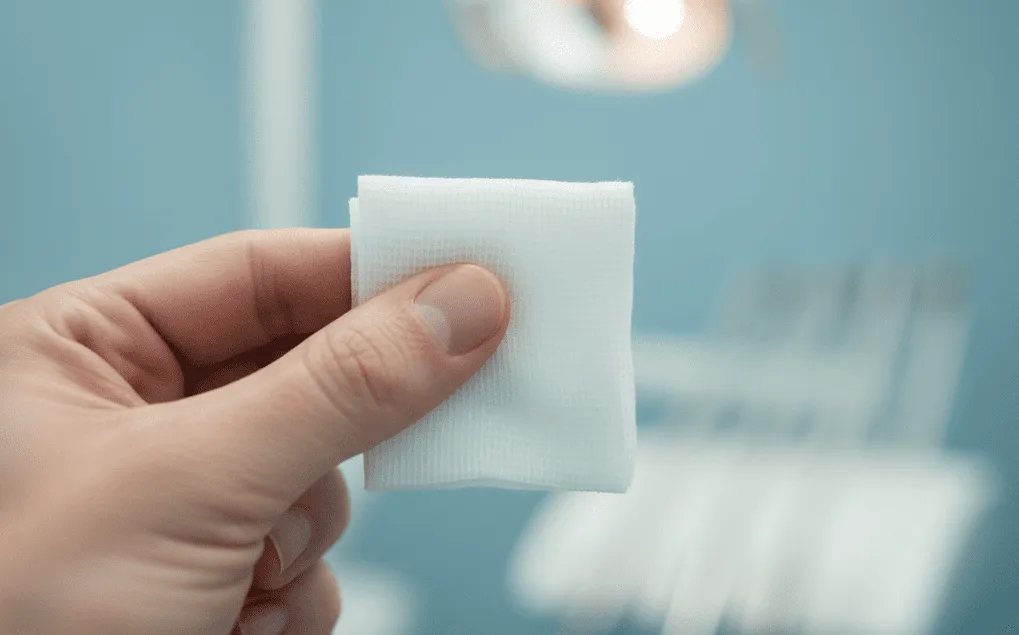
- If YES: You need to apply pressure. Fold a piece of clean sterile gauze into a small square, place it directly over the socket, and bite down firmly for 30-45 minutes. Pressure is the key to stopping bleeding.
- Tip: If you don’t have gauze, a wet black tea bag can work (the tannic acid helps clotting).
- Do Not Rinse Yet: Vigorous rinsing can wash away any new fragile clot forming. If you made a mistake during early recovery, read our guide on what to do if you accidentally rinsed or spit after tooth extraction.
- Rest & Elevate: Lie down with your head propped up on pillows to reduce blood flow to the head.
Official Post-Extraction Care Guide (PDF)
Don’t risk a painful Dry Socket! Download our printable 7-day clinical guide showing you exactly what to eat, what to avoid, and how to clean safely during your recovery.
✓ Includes the complete “No-Suction” rule list
✓ Safe meal plans for Days 1 to 7
✓ Proper salt-water rinsing instructions
*100% Free Resource. A quick human verification is required to prevent bot spam.
The “Day 3” Danger Zone: Dry Socket Explained
You might have heard horror stories about Dry Socket (Alveolar Osteitis). It is the most common complication, especially after wisdom teeth removal.
Why Day 3? Search data shows many people ask about “blood clot fell out 3 days after tooth extraction.” This is because the clot naturally shrinks around day 3. If it falls out completely at this stage, the bone becomes exposed before new tissue has covered it.
If discomfort lingers beyond day 3, see our guide on whether you should still have pain 5 days after tooth extraction.
Symptoms of Dry Socket:
- Severe Pain: Intense, throbbing pain that starts 2-4 days after extraction.
- Radiating Pain: Pain that shoots up to your ear, eye, or neck on the same side.
- Empty Socket: Visible bone in the socket.
- Bad Breath: A strong, unpleasant odor.
Dry Socket Relief (Emergency Home Care)
If you can’t see a dentist immediately, the gold standard for relief is Natural Clove Oil. It contains Eugenol, a powerful natural anesthetic used by dentists for decades. Applying a tiny drop to a piece of gauze and gently resting it near the socket naturally numbs the pain almost instantly.
For details on managing discomfort safely, read about why ibuprofen usage after tooth extraction requires proper timing.
Does a Lost Clot Always Mean Dry Socket?
Here is the good news: No.
- Scenario A (High Risk): The clot falls out on Day 1 or 2, and you are in severe pain. → High risk of Dry Socket.
- Scenario B (Low Risk): A piece of the clot comes out on Day 4 or 5, but you have no pain. → You are likely fine.
The body has a backup plan. If the main clot is lost but the socket is small or healing has started, the body can often heal by “secondary intention” (filling in from the bottom up). If there is no pain, there is usually no problem.
How to Prevent the Clot from Falling Out (The “Don’ts”)
To ensure the healing process goes smoothly, avoid these clot-killers for the first 72 hours:
- No Suction: This is the #1 enemy.
- NO Straws: The vacuum force pulls the clot out instantly.
- NO Smoking/Vaping: The sucking motion + chemicals = high risk of dry socket. Learn more about smoking risks here.
- NO Spitting: Let saliva drool out gently; don’t spit forcefully.
- Watch Your Food:
- Eat soft foods (yogurt, mashed potatoes, lukewarm soup).
- Avoid crunchy, crumbly foods (chips, nuts) that can get stuck in the empty socket.
- Gentle Hygiene:
- Brush your other teeth normally but skip the extraction site for the first day.
- From Day 2, rinse very gently with warm salt water to keep the area clean without disturbing the clot. General post-op guidance from the Mayo Clinic recommends gentle salt-water rinses after 24 hours rather than aggressive rinsing.
Dangerous home “hacks” to avoid
- Aspirin on the gum or tooth. Aspirin is an acid; it chemically burns the gum and does nothing for the pain. Swallow pain relievers as the label directs, never place them.
- Undiluted clove oil on an open wound or socket. A trace on a tooth can numb briefly; neat clove oil on gum tissue or a fresh socket causes burns and delays healing.
- Rinsing with alcohol, whisky, or hydrogen peroxide. They dry and irritate tissue, disturb a healing clot, and interact with pain relievers. Warm salt water is enough.
- Popping or draining a swelling yourself. Pushing on an abscess can spread the infection. Cold outside the cheek, and a dentist today.
- Leftover or borrowed antibiotics. They mask symptoms for a few days, breed resistant bacteria, and the tooth still needs treatment.
- Heat on a swollen face. Heat increases blood flow and swelling around an infection; use cold until a dentist has seen it.
When to Call Your Dentist
While you can manage minor issues at home, you should call your dentist or oral surgeon if:
- Bleeding won’t stop after 1-2 hours of pressure.
- You have severe pain that is not helped by painkillers.
- You see signs of infection (fever, swelling, pus).
- You suspect a dry socket and need professional dressing to relieve the pain.
🧮 Free tool: Check your personal dry socket risk score in 60 seconds.
The Dental Recovery & Savings Bundle gives you a day-by-day recovery calendar (what’s normal, what to eat, when to call your dentist), plus 4 scripts to lower your next dental bill. Instant PDF, $12, 30-day money-back promise.
Get the recovery bundle →
Frequently Asked Questions
Can a blood clot dislodge after 5 days?
While it is less common after 5 days, a clot can still dislodge if exposed to strong physical pressure like hard foods or suction. However, by day 5, initial granulation tissue has usually begun lining the socket, significantly reducing the risk of full bone exposure.
Can you lose blood clot and not get dry socket?
Yes. If a portion of the clot comes out after early tissue regeneration has started, or if the socket is small, the body can continue healing without developing severe pain or inflammation. If there is no increasing throbbing pain, a dry socket has likely not formed.
When can I stop worrying about dislodging blood clot tooth extraction?
Most dentists consider the critical window to be the first 7 to 10 days following a tooth extraction. After day 7, new tissue securely fills the base of the socket, drastically lowering the chance of clot detachment.
How to tell if a blood clot is still in the socket?
Look closely into a mirror under bright light. A healthy socket containing a clot will appear dark red, brown, or covered with a soft greyish-white layer (granulation tissue). If you see a deep, dark empty hole or whitish exposed bone accompanied by intense pain, the clot is absent.
Can dry socket be prevented?
Yes. Prevention involves strict adherence to post-operative instructions: avoiding drinking through a straw, refraining from smoking or vaping, eating soft foods, avoiding forceful spitting, and maintaining clean oral hygiene with gentle salt-water rinses after the first 24 hours.
How Can I Protect a Blood Clot After Tooth Extraction?
To protect a blood clot, do not swish mouthwash or water forcefully during the first week. Rest with your head elevated, stick to lukewarm soft foods, keep gauze over active bleeding spots, and gently let salt water roll out of your mouth rather than spitting.
How Long Does it Take For a Blood Clot to Form?
A blood clot typically forms within the first 24 hours immediately following an extraction. Over the next 3 to 7 days, it transforms into granulation tissue to pave the way for permanent gum and bone growth.
This article is for informational purposes only and is not a substitute for professional advice. Consult a qualified professional for personal recommendations.
💡 Quick Recap & Essentials
- Avoid straws, smoking, and spitting for at least 3 days.
- White stuff in the socket is usually good healing tissue.
- If the clot falls out but you have no pain, you are likely okay.
Before You Go: Did You Get Your Diet Guide?
Healing correctly in the first 7 days is vital. Make sure you have our printable checklist on hand to know what foods are safe to eat today.
Download the 7-Day Care PDF🛒 Products that can help
- Rester's Choice Jaw Ice Pack Wrap — Provides hands-free cold therapy to soothe swelling and throbbing nerve pain after a tooth extraction. Check price on Amazon →
- Oral-B Mouth Sore Special Care Oral Rinse — Cleanses and soothes sensitive extraction sites gently without alcohol or burning harshness. Check price on Amazon →
- Medline Sterile 4×4 Gauze Sponges — Helps control lingering or sudden bleeding by allowing you to apply gentle, firm pressure over the socket. Check price on Amazon →
- Living Well Hydroxyapatite Gum Health Mouthwash – Alcohol-free, fluoride-free rinse that supports enamel remineralization and soothes sensitive gums after extraction. Check price on Amazon →
As an Amazon Associate we earn from qualifying purchases. Recommendations are based on published guidance and verified owner reviews, not sponsorship.


