Can Sinus Infection Cause Tooth Pain? How to Tell & Relief
Can a sinus infection cause tooth pain? Yes, in upper back teeth. How to tell sinus vs dental pain, relief for unbearable sinus tooth pain, and who to see.
✅ Quick answer
Yes, a sinus infection can cause tooth pain, usually a dull ache in several upper back teeth on one or both sides, because the roots of those teeth sit just below the maxillary sinuses. Sinus tooth pain often comes with congestion and facial pressure and gets worse when you bend over or lie down. Pain in one specific tooth, pain to hot, cold or biting, or swelling of the gum or face points more toward a dental problem, so see a dentist.
When your head is stuffed up and your upper teeth start to ache, it is natural to wonder whether you suddenly have a cavity or whether your sinuses are to blame. The two can feel surprisingly similar, and sometimes a tooth problem can even cause a sinus infection.
This guide explains why sinus infections cause tooth pain, how to tell sinus pain from dental pain, what helps when sinus tooth pain feels unbearable, and when to see a dentist versus a doctor.
📩 Important: after you sign up, open the email from Go Fix Teeth and tap Confirm. Your PDF opens right away. Not there? Check Spam or Promotions.
Why a sinus infection can make your teeth hurt
The maxillary sinuses are air-filled spaces in your cheekbones, just above your upper back teeth. In many people, the roots of the upper molars and premolars sit very close to the sinus floor, separated by only a thin layer of bone.
During a sinus infection (sinusitis), the lining of the sinuses swells and mucus builds up. That pressure can press on the nerves of nearby teeth. The result is “referred” pain: the teeth themselves may be healthy, but they ache because of what is happening above them.
Most sinus infections start with a cold or other virus. According to Mayo Clinic and the NHS, symptoms of acute sinusitis often include a blocked or runny nose, thick nasal discharge, facial pain or pressure, reduced sense of smell and, in some people, aching in the upper teeth or jaw.
Sinus tooth pain vs dental pain
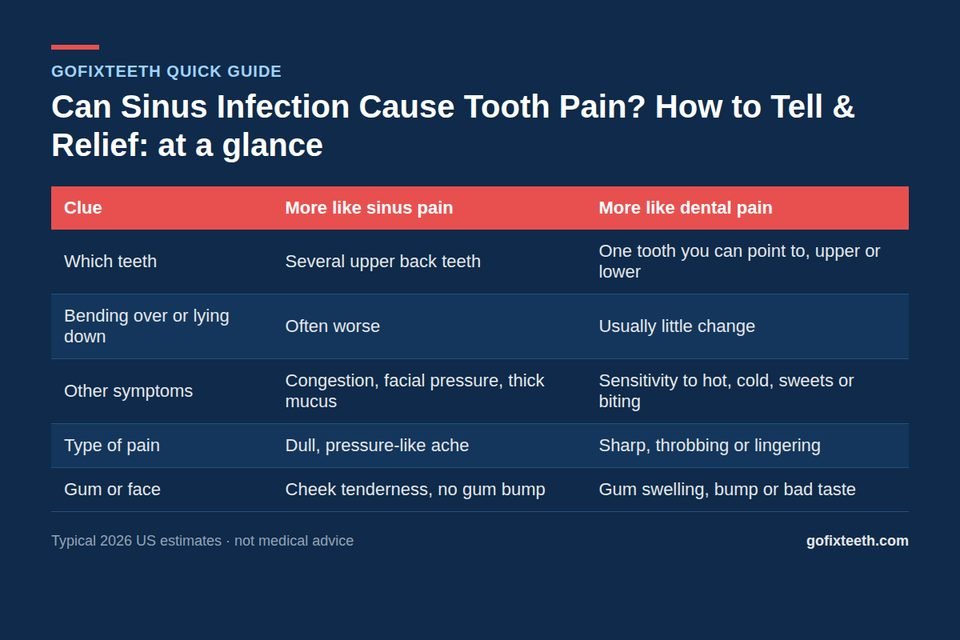
| Clue | More like sinus pain | More like dental pain |
|---|---|---|
| Which teeth | Several upper back teeth | One tooth you can point to, upper or lower |
| Bending over or lying down | Often worse | Usually little change |
| Other symptoms | Congestion, facial pressure, thick mucus | Sensitivity to hot, cold, sweets or biting |
| Type of pain | Dull, pressure-like ache | Sharp, throbbing or lingering |
| Gum or face | Cheek tenderness, no gum bump | Gum swelling, bump or bad taste |
These are general patterns, not a diagnosis. You can have both problems at the same time, and an infected upper tooth can spread into the sinus. If you are unsure, a dentist can check the teeth with an exam and X-rays.
Simple checks you can do at home
- The bend test. Stand up, then bend forward so your head is below your waist for a few seconds. A sudden increase in pressure across the upper teeth or cheeks suggests sinus involvement.
- Count the teeth. Sinus pain tends to spread across several upper teeth and is hard to pin to one. Dental pain usually points to one tooth.
- Notice the timing. Did the ache start with or after a cold, allergies or congestion? Does it ease as your nose clears?
- Check for temperature sensitivity. Sharp, lingering pain from hot or cold drinks is more typical of a tooth problem.
- Look at your lower teeth. Sinus infections do not usually cause pain in lower teeth. Lower tooth pain points toward a dental cause, or sometimes the jaw joint; see lower jaw toothache and ear pain on the same side.
Relief for sinus tooth pain
If your symptoms fit a sinus cause, treating the congestion usually eases the tooth pain too. Options many people find helpful:
- Saline nasal rinse or spray. Rinsing with a saline kit helps clear mucus. Use distilled, sterile or previously boiled and cooled water, never plain tap water, in rinse bottles or neti pots.
- Steam and warm compresses. Breathing steam from a hot shower or placing a warm, damp cloth over your cheeks can relieve pressure.
- Stay hydrated. Fluids help thin mucus.
- Sleep with your head raised. An extra pillow can reduce nighttime pressure.
- Over-the-counter pain relievers. Ibuprofen or acetaminophen can help if they are safe for you. Follow the label and ask a pharmacist if you have health conditions or take other medicines.
- Decongestants or steroid nasal sprays. These may help some adults. Decongestant sprays should only be used for a few days, and oral decongestants are not right for everyone, including some people with high blood pressure. Ask a pharmacist.
Most sinus infections are viral and improve within about 7 to 10 days. Antibiotics are not usually needed unless a doctor thinks a bacterial infection is likely.
When sinus tooth pain feels unbearable
Sinus pressure can be miserable, but truly unbearable pain is a reason to look more closely. Severe, throbbing pain in the teeth is more often linked to a dental problem, such as a deep cavity, an infected nerve or an abscess, than to simple congestion. It can also mean the sinus infection is more serious than usual.
While you arrange to be seen:
- Use an over-the-counter pain reliever as directed on the label
- Keep your head raised, especially at night
- Apply a warm compress to the cheeks for sinus pressure, or a cold pack if you think the pain is from a tooth
- Avoid very hot, cold or sugary foods and drinks
If pain is keeping you from sleeping, our guide to extreme tooth pain at night has more safe, short-term steps, and the best painkiller for tooth nerve pain explains common options and their limits. Never place aspirin or crushed pills directly on the gums, as this can burn the tissue.
Useful on Amazon for this job
As an Amazon Associate we earn from qualifying purchases. Always confirm fit for your exact vehicle or ask your dentist.
The Dental Recovery & Savings Bundle gives you 4 word-for-word scripts to ask for a cash price on an emergency exam and X-rays, check your insurance and set up a payment plan, plus a printable calendar to track symptoms and recovery after treatment. Instant PDF, $12, 30-day money-back promise.
Get the savings bundle →
When to see a dentist vs a doctor
See a dentist if:
- The pain is in one tooth, or in a lower tooth
- The tooth hurts with hot, cold, sweets or biting
- You notice gum swelling, a pimple-like bump on the gum or a bad taste
- Your tooth pain continues after your congestion has cleared
- You have had repeated sinus infections on the same side; a tooth infection can sometimes be the hidden cause
See a doctor if:
- Sinus symptoms last more than about 10 days without improving
- You get better and then suddenly worse
- You have a fever lasting more than 3 to 4 days
- You have repeated sinus infections
Seek emergency care right away for: swelling or redness around the eye, double vision or vision changes, a severe headache, a stiff neck, confusion, high fever, swelling of the face or jaw that is spreading, or trouble swallowing or breathing. These can be signs of a serious infection.
What the visit may involve
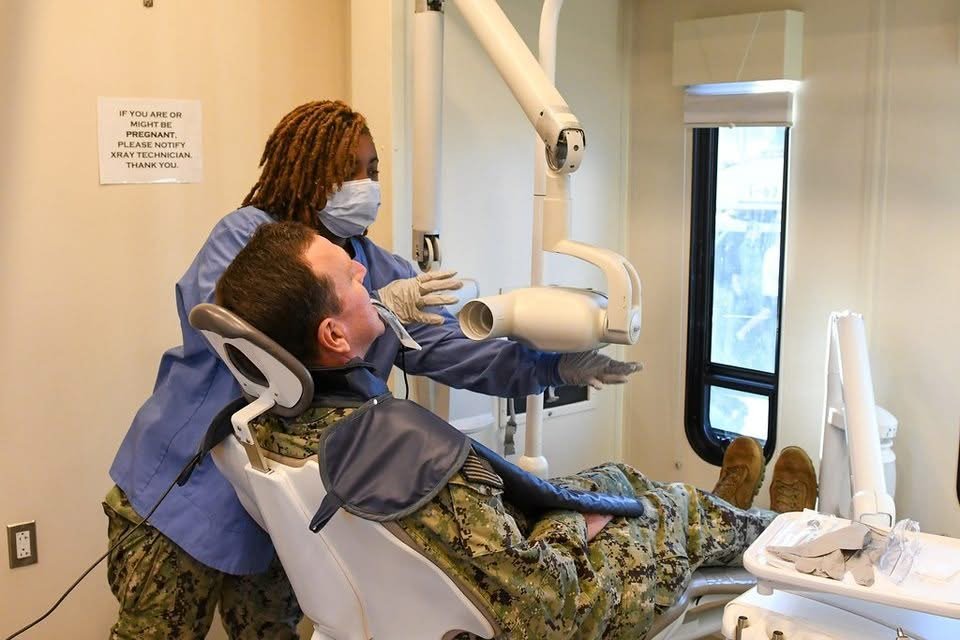
A dentist will usually tap on the teeth, test them with cold, check the gums and take X-rays to look for decay, a cracked tooth or an infection at the root tip. If the teeth look healthy, they may tell you the pain is likely from your sinuses and suggest seeing your doctor.
A doctor will ask about your symptoms and look in your nose. Imaging is not usually needed for a simple sinus infection, but may be used if symptoms are severe, keep coming back or do not improve. If a tooth is found to be the source of a sinus infection, treating the tooth, for example with a root canal or extraction, is often part of the solution.
Frequently asked questions
Which teeth hurt from a sinus infection?
Usually the upper back teeth, the molars and premolars, because their roots sit close to the maxillary sinuses. Front teeth and lower teeth are less likely to hurt from sinus pressure.
How long does sinus tooth pain last?
It usually eases as the sinus infection clears, often within 1 to 2 weeks. If tooth pain continues after your congestion is gone, see a dentist.
Can a tooth infection cause a sinus infection?
Yes. An infection in an upper back tooth can spread into the sinus above it. This is one reason dentists check the teeth when sinus problems keep returning on one side.
Why do my teeth hurt more when I bend over?
Bending forward shifts pressure in the swollen sinuses, which can press on nerves of the upper teeth. This is a common clue that sinuses are involved.
Should I go to the ER for sinus tooth pain?
Go for facial or eye swelling, vision changes, severe headache, stiff neck, high fever, or trouble breathing or swallowing. Otherwise, see a dentist or doctor promptly.
Sources
- Mayo Clinic. Acute sinusitis.
- Cleveland Clinic. Sinusitis.
- NHS. Sinusitis (sinus infection).
- Mayo Clinic. Tooth abscess.
This article is for general education and does not replace advice from your dentist or doctor, who can examine you and find the cause of your pain.