Dentures vs Implants: Cost, Comfort and Which Is Better
Dentures vs implants compared: cost, comfort, bone loss, lifespan and daily care, plus implant-supported dentures as a middle ground.
✅ Quick answer
Dentures are the lower-cost, non-surgical option (about $1,500–$5,000 per arch), while implants are more stable, feel more like natural teeth and help preserve jawbone, but cost far more (about $15,000–$35,000 per arch for a fixed full-arch bridge). Many people choose a middle ground: implant-supported snap-in dentures, which typically cost about $6,000–$15,000 per arch. Typical 2026 US estimates; they vary by region and insurance.
Choosing between dentures and implants is one of the biggest decisions in dental care, both for your budget and your day-to-day life. Both can give you a full smile again. They differ in how they stay in place, how they feel when you eat, what they do to your jawbone over time, and of course what they cost.
This guide compares the two side by side, explains the in-between option that works well for many people, and lists the questions that help you decide.
📩 Important: after you sign up, open the email from Go Fix Teeth and tap Confirm. Your PDF opens right away. Not there? Check Spam or Promotions.
Dentures vs implants at a glance
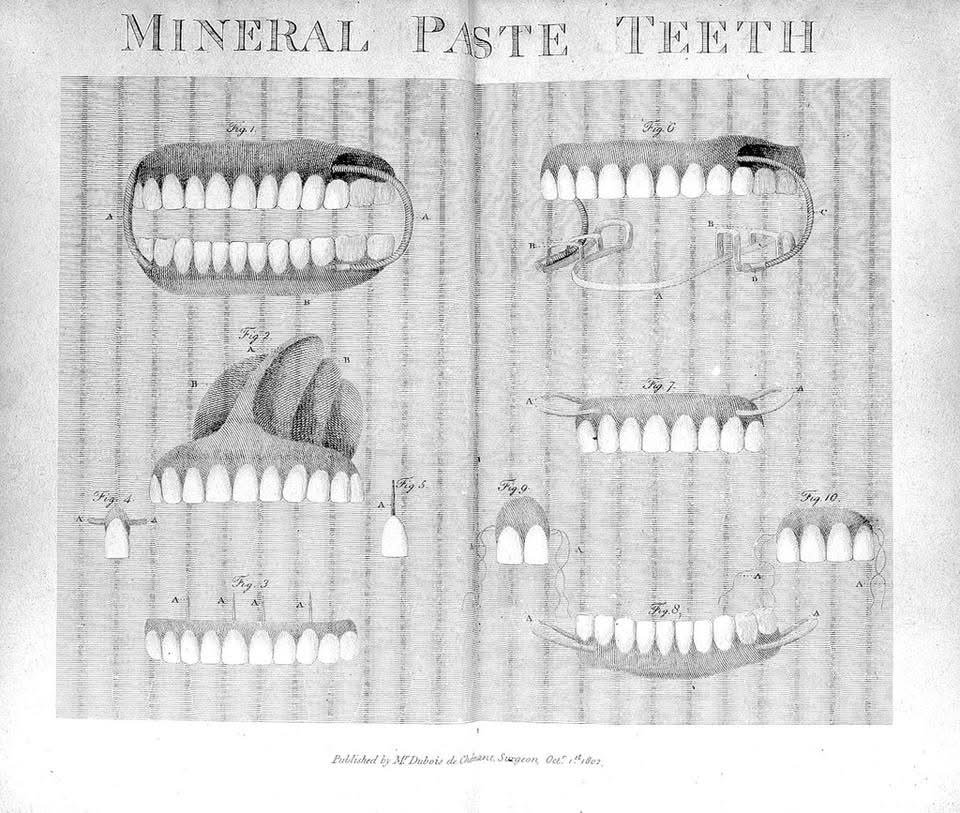
| Factor | Dentures | Implants |
|---|---|---|
| Cost per arch | $1,500–$5,000 | $15,000–$35,000 |
| Comfort | Can slip or rub | Stable, fixed |
| Bone loss | Continues | Helps slow it |
| Lifespan | Often 5–10 years | Many years |
| Daily care | Remove and soak | Brush in place |
Typical 2026 US estimates; they vary by region and insurance. Implant prices here are for a fixed full-arch bridge (All-on-4 style). Single-tooth implants typically cost about $3,000–$6,000 each. Dentures often need relining or remaking as the gums and bone change; implant bridges may need repairs to the teeth over time.
How dentures work
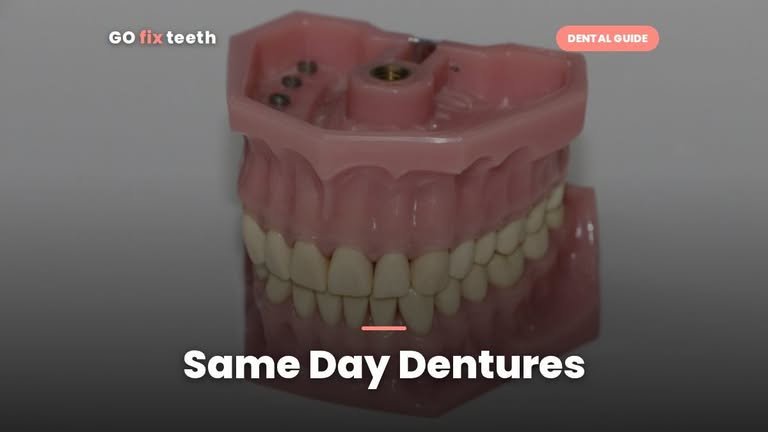
A complete denture is a set of artificial teeth on a gum-colored base that rests on your gums. Upper dentures get suction from the roof of the mouth, so they often stay in fairly well. Lower dentures sit on a narrow ridge with the tongue moving beside them, so they tend to move more. Partial dentures replace some teeth and clip onto the ones you still have.
Pros of dentures:
- Much lower cost, and more often partly covered by insurance
- No surgery beyond any extractions
- Can be made fairly quickly, including immediate dentures placed the day teeth are removed (see full mouth extraction with immediate dentures)
- Easy to repair or adjust
Cons of dentures:
- Can slip when eating or talking, especially lower dentures
- Upper dentures cover the palate, which can dull taste and feel bulky
- Chewing force is much weaker than with natural teeth
- The jawbone keeps shrinking without tooth roots, so fit gets worse over time
- Sore spots and the need for adhesive for some people
Lighter options exist for partials; see flexible dentures.
How implants work
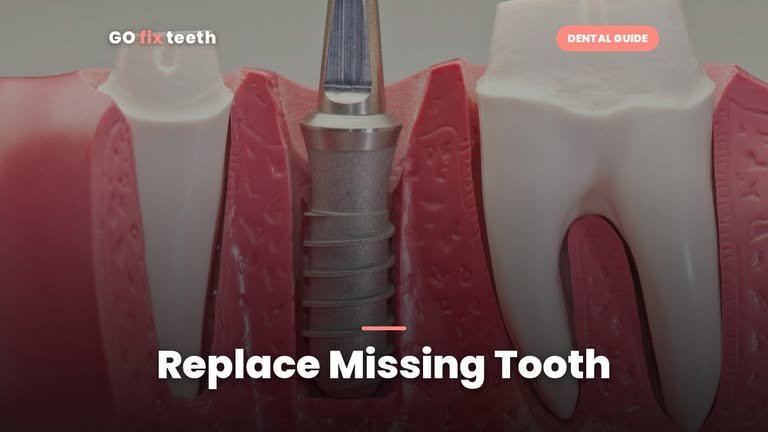
Implants are posts placed in the jawbone that act like tooth roots. After healing, they hold a crown, a bridge or a full arch of teeth. Because they’re anchored in bone, they don’t slip, and chewing feels much closer to natural teeth.
Pros of implants:
- Stable, fixed teeth with no adhesive
- Stronger chewing, so a wider range of foods
- No plate over the roof of the mouth with a fixed bridge
- Help maintain the jawbone where they’re placed
- Long-lasting with good care
Cons of implants:
- High cost, with limited insurance coverage
- Surgery, healing time and often several months of treatment
- May need bone grafting if bone has shrunk
- Not suitable for everyone; uncontrolled diabetes, heavy smoking and some medicines can raise the risk of problems
- Gum infection around implants (peri-implantitis) can occur without good cleaning
Useful on Amazon for this job
As an Amazon Associate we earn from qualifying purchases. Always confirm fit for your exact vehicle or ask your dentist.
A dentist’s tips for choosing between dentures and implants
- Lower dentures are the hardest to keep in. Upper dentures often hold by suction, while lowers tend to move. Ask whether a regular upper with a two-implant snap-in lower denture could give you stable chewing for much less than full-arch implants.
- Your first denture can block later coverage. Many plans have a multi-year replacement limit, and some only pay the denture rate toward implants (an alternate benefit clause).
- Snap-in dentures need upkeep. Ask what the office charges to replace the small nylon inserts, which wear out with daily use, and whether the denture has a metal reinforcement.
- Dentures don’t stop bone loss. If you start with a denture to save money, have your bone checked yearly so you don’t miss the chance for simpler implant placement.
- Seat snap-in dentures with your fingers, not by biting, and take any removable denture out at night.
- Warning signs: needing more and more adhesive, a rocking denture, or a loose implant post means it’s time for a check, reline or adjustment.
The Dental Recovery & Savings Bundle includes 4 ready-to-use scripts to lower your dental bill, so you know exactly how to ask for itemized quotes, cash discounts and payment plans for dentures or implants. You also get a printable day-by-day recovery calendar for after extractions or surgery. Instant PDF, $12, 30-day money-back promise.
Get the savings scripts →
The middle ground: implant-supported dentures
An implant-supported (overdenture or snap-in) denture uses two to four implants to hold a denture firmly in place. You can still remove it to clean it, but it clicks onto the implants instead of floating on the gums.
- Cost: typically about $6,000–$15,000 per arch
- Stability: far better than a regular denture, especially for the lower jaw
- Palate: an upper overdenture can sometimes be made with less coverage of the roof of the mouth
- Upkeep: the attachments wear and need replacing periodically
For many people with a loose lower denture, two implants and a snap-in denture make a big difference at a fraction of the cost of a fixed bridge. Read more in permanent dentures, and for full-arch pricing see full mouth dental implants cost.
Cost over time
Dentures cost less at the start, but that’s not the whole picture. Over the years, dentures commonly need relines, repairs and eventually a new set, along with adhesives and cleaning products. Implant bridges need professional maintenance and may need new teeth or screws at some point. Over a long period, the gap in total cost narrows somewhat, though implants usually still cost more. The best choice is the one you can afford without skipping the care that keeps it working.
Daily life: eating, speaking and care
Cost and comfort numbers only tell part of the story. Here’s how the two options tend to feel day to day:
- Eating. With dentures, many people cut food into smaller pieces and avoid very hard, sticky or chewy foods such as steak, corn on the cob or caramel. Fixed implant bridges allow a much wider diet, though very hard foods can still chip the teeth.
- Speaking. New dentures often cause a lisp or clicking sounds for the first weeks, which usually improves with practice. Implant bridges can also take some getting used to, but they don’t move while you talk.
- Cleaning. Dentures come out to be brushed and soaked, and your gums need gentle cleaning too. Fixed bridges stay in; you clean under them with a water flosser, special floss or small brushes, and the dentist removes them for a deeper cleaning from time to time.
- Checkups. Both need regular dental visits. Denture wearers still need exams to check the gums and fit, and to screen for mouth sores.
If you already wear dentures and struggle mainly with the lower one, that’s often the arch where adding implants makes the biggest difference.
Which is right for you?
Dentures may suit you better if:
- Your budget is limited and you need teeth soon
- You have health issues that make surgery risky
- You don’t have enough bone and don’t want grafting
- You want a simple, adjustable option
Implants may suit you better if:
- A loose denture is affecting your eating, speech or confidence
- You want teeth that stay in place all the time
- You have enough bone (or are willing to graft) and are in good general health
- You can commit to daily cleaning and regular checkups
Many people start with dentures and add implants later. If you think you may want implants, ask whether your denture can be converted to a snap-in design down the road.
Ways to save
- Ask whether your insurance pays toward dentures, extractions or part of an implant case
- Check dental schools and community health centers for lower fees
- Get itemized quotes from more than one office
- Use an FSA or HSA for eligible treatment
- Consider treating one arch at a time
See a dentist promptly if…
- Your denture causes sore spots that don’t heal within a week or two
- Your denture has become very loose or cracked
- You notice a sore, white or red patch in your mouth that doesn’t go away
- Gums around an implant are swollen, bleeding or draining, or an implant feels loose
Seek emergency care right away, or call 911, for spreading facial swelling, fever with mouth pain, or trouble swallowing or breathing.
Frequently asked questions
Are implants better than dentures?
Implants are generally more stable and help preserve bone, but they cost more and need surgery. Dentures are a good option for many people, especially on a budget.
Can I switch from dentures to implants later?
Often yes, though bone may have shrunk and grafting could be needed. Some dentures can be adapted into snap-in dentures.
Do implant-supported dentures come out?
Snap-in versions come out for cleaning. Fixed full-arch bridges are screwed in and are only removed by the dentist.
Is getting implants painful?
The surgery is done with numbing and often sedation. Soreness and swelling for several days afterward are common and usually managed with pain relievers.
Does Medicare cover dentures or implants?
Original Medicare generally doesn’t. Some Medicare Advantage plans offer dental benefits, often with yearly limits.
Sources
- Cleveland Clinic. Dental Implants.
- American Dental Association, MouthHealthy. Implants.
- MedlinePlus. Dental Health.
- National Institute of Dental and Craniofacial Research. Finding Low-Cost Dental Care.
This article is for general education and does not replace advice from your dentist, who can examine your mouth and help you choose the right option.