Turkey Teeth: What They Are, Risks, Costs and Fixes
What “Turkey teeth” means, why heavily filed-down teeth are risky, US vs abroad costs, how to vet dental tourism and how problems get repaired.
✅ Quick answer
“Turkey teeth” is slang for a full set of very white crowns or veneers done abroad, often in Turkey, where healthy teeth are sometimes filed down to small stumps to fit them. The look can be striking, but heavy filing can’t be undone and can lead to sensitivity, nerve damage, root canals and costly repairs later. Done well, with a conservative plan, veneers or crowns can be safe anywhere; the problem is over-treatment of healthy teeth, not the country.
The phrase took off on social media as people posted videos of their new, bright white smiles after a week-long trip abroad. Packages advertised a full smile for a fraction of US prices, often bundled with hotel stays and airport pickups. Later, a different set of videos appeared: people with gum pain, bad breath, crowns that fell off, or images of their teeth ground down to small pegs before the crowns went on.
This guide explains what Turkey teeth actually are, why the main risk is the amount of natural tooth removed, how costs compare, how to check a clinic if you’re thinking about dental tourism, and what can be done if you already have problems.
📩 Important: after you sign up, open the email from Go Fix Teeth and tap Confirm. Your PDF opens right away. Not there? Check Spam or Promotions.
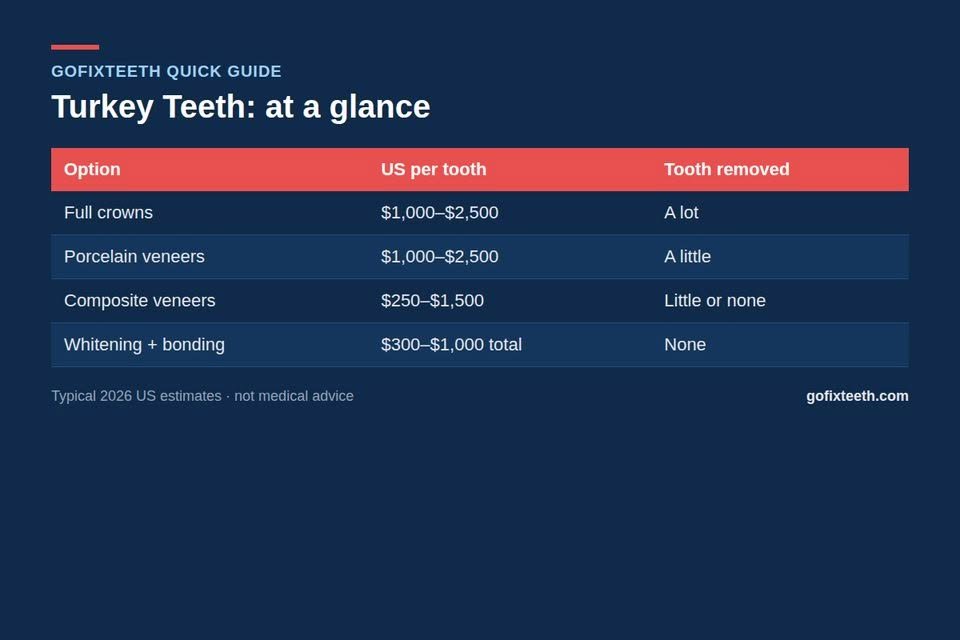
Turkey teeth vs US smile makeover costs
| Option | US per tooth | Tooth removed |
|---|---|---|
| Full crowns | $1,000–$2,500 | A lot |
| Porcelain veneers | $1,000–$2,500 | A little |
| Composite veneers | $250–$1,500 | Little or none |
| Whitening + bonding | $300–$1,000 total | None |
Typical 2026 US estimates; they vary by region and insurance. A US smile makeover of 16 to 20 porcelain units can easily reach five figures. Clinics abroad often advertise full-smile packages at a small fraction of that, but the quote may not include flights, hotel nights, extra visits, root canals discovered during treatment or follow-up repairs back home.
What “Turkey teeth” actually means
There are two very different treatments that get lumped together:
- Veneers are thin shells bonded to the front of the tooth. Traditional porcelain veneers usually need only a thin layer of enamel removed from the front surface. Some cases need little or no reshaping.
- Crowns cover the entire tooth. To make room, the dentist removes enamel and dentin from every side. On a healthy tooth, that is a large and permanent change.
Many of the problem cases involve people who believed they were getting veneers but actually received full crowns on healthy teeth, often 20 or more at once, sometimes in a few days. The teeth were filed down to thin stumps so the crowns could be made extra white and uniform. For a full breakdown of the two, see tooth crown vs veneer.
Why over-prepared teeth are a problem
The inside of every tooth contains the pulp, a soft core of nerves and blood vessels. Enamel and dentin protect it. When too much tooth structure is removed, especially quickly and in many teeth at once, several things can happen:
- Sensitivity and pain to hot, cold and biting
- Nerve damage, where the pulp becomes inflamed or dies, which can lead to infection and the need for a root canal or extraction
- Weak teeth that are more likely to break, leaving less to work with when the crown needs to be replaced
- Gum problems when crown edges are bulky or sit too deep, making the area hard to clean
- Bite problems, including jaw pain or chipped porcelain, if the bite wasn’t carefully adjusted
Crowns and veneers don’t last forever. Even good ones are often replaced at some point. Each replacement may remove a bit more tooth, so starting with the least invasive option protects you for decades. Once a tooth is ground down, the enamel never grows back.
Is it Turkey, or is it the treatment plan?
It is important to be fair here. Turkey and many other countries have well-trained, careful dentists, and plenty of people have good results abroad. Poor plans also happen in the US. The risk comes from a combination of factors common in fast, low-cost tourism packages:
- Treatment plans made from photos or a quick video call
- Many teeth treated in a very short trip, with little time to test the fit or bite
- Pressure to choose crowns because they’re faster than careful veneer work
- Very little follow-up once you fly home
- Limited legal recourse if something goes wrong
Useful on Amazon for this job
As an Amazon Associate we earn from qualifying purchases. Always confirm fit for your exact vehicle or ask your dentist.
Before you book dental work abroad
- Ask exactly how the teeth will be prepared. Some clinics file healthy teeth down for full crowns when they advertise “veneers.” Removed enamel can’t be replaced.
- Fixing it at home can be hard. US insurance usually won’t pay to redo cosmetic work done abroad, and some dentists are reluctant to repair it, so a full remake may be out of pocket.
- Heavy reduction can harm the nerves. Teeth ground down a lot can need root canals later, which can cost more than conservative treatment would have.
- Ask for individual crowns you can floss between, and margins that don’t sit too deep under the gums.
- Don’t fly home right after cementation. Allow time for the bite to be checked and adjusted, and wear a night guard to protect ceramics.
- Get copies of your records: X-rays, scans, material and cement used. See a local dentist for a full check soon after you return.
Warning signs after treatment: gums that stay red and bleed around every crown, pain with hot drinks, toothaches at night or a pimple on the gum need a dentist visit soon.
The Dental Recovery & Savings Bundle includes 4 ready-to-use scripts to lower your dental bill, so you can ask a US office for cash discounts, phased treatment or payment plans before you book a flight. You also get a printable day-by-day recovery calendar for after treatment. Instant PDF, $12, 30-day money-back promise.
Get the savings scripts →
How to vet dental tourism before you book
If you are still considering treatment abroad, these steps lower the risk:
- Get a US exam first. A local dentist can check for gum disease, decay and bite problems, and give you a written opinion on what your teeth actually need.
- Ask in writing: crowns or veneers, and how many? Ask how much tooth will be removed and why. If you only want whiter, more even teeth, ask whether whitening, bonding or minimal-prep veneers could work.
- Check the dentist, not just the clinic. Ask for the name, qualifications and licensing of the dentist doing the work. Be wary of plans made by a “patient coordinator.”
- Look for a staged plan. Good cosmetic work usually involves a mock-up or temporary teeth, and time to adjust shape and bite.
- Ask about materials and lab. Request the brand and type of porcelain or zirconia, and get records of what was placed.
- Understand the warranty. Many only apply if you return to the clinic, at your own travel cost.
- Get your records. Before you leave, ask for X-rays, scans and notes so a US dentist can help later.
- Budget for the unexpected. Include possible root canals, extra nights and follow-up care at home.
Already have Turkey teeth problems? Repair options
If you had work done abroad and something feels wrong, see a dentist at home rather than waiting for a return trip. Bring any records you have. Depending on what they find, options may include:
- Bite adjustment if crowns hit too hard or unevenly
- Recementing a crown that came loose, if the tooth underneath is healthy
- Root canal treatment for teeth whose nerves were damaged
- Gum treatment and better cleaning aids if crown edges are trapping plaque
- Replacing poorly fitting crowns, often one section at a time to spread the cost
- Extraction and replacement with an implant or bridge for teeth that cannot be saved
Repairs can be expensive, since each new crown is typically priced like any other US crown. Ask for a phased plan that deals with pain and infection first, then function, then looks.
See a dentist promptly if…
- You have ongoing sensitivity or throbbing pain under crowns or veneers
- Your gums bleed, look swollen or recede around new teeth
- You have a bad taste or smell that brushing doesn’t fix
- A crown or veneer is loose, chipped or came off (do not glue it with household glue)
- Your jaw aches or your bite feels off
Seek emergency care right away, or call 911, for facial swelling that is spreading, fever with tooth pain, or trouble swallowing or breathing.
Frequently asked questions
Why are they called Turkey teeth?
The name comes from the large number of people who travel to Turkey for low-cost cosmetic dental packages and share the results online.
Are Turkey teeth veneers or crowns?
They can be either, but many problem cases involve full crowns placed on healthy teeth, which requires removing much more tooth structure.
Can Turkey teeth be reversed?
No. Removed enamel doesn’t grow back. Crowns can be replaced, but the teeth underneath will always need to be covered.
How long do Turkey teeth last?
It depends on the quality of the work and your care. Well-made crowns and veneers often last many years, but poorly fitted ones may fail much sooner.
Is getting veneers abroad ever a good idea?
It can be, with a qualified dentist, a conservative plan and enough time for adjustments. Get a home exam first and understand who will handle follow-up.
Sources
- American Dental Association, MouthHealthy. Veneers.
- American Dental Association, MouthHealthy. Crowns.
- Cleveland Clinic. Dental Crowns.
- Cleveland Clinic. Root Canal.
- National Institute of Dental and Craniofacial Research. Finding Low-Cost Dental Care.
This article is for general education and does not replace advice from your dentist, who can examine your teeth and recommend the right treatment.